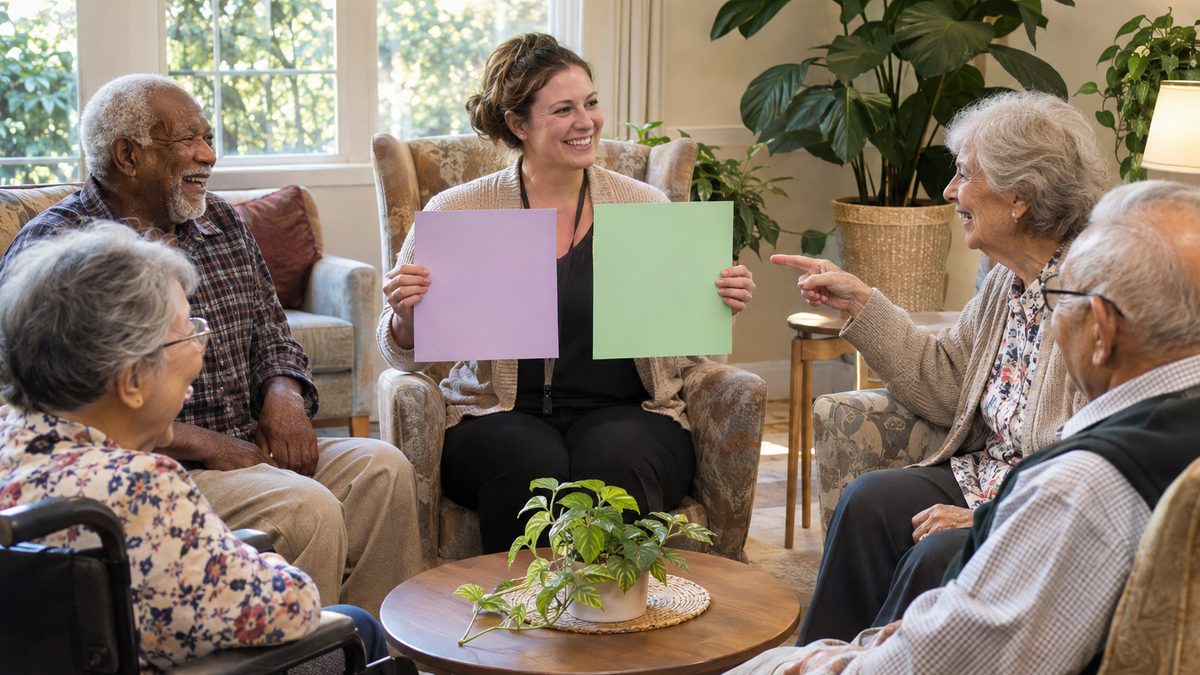
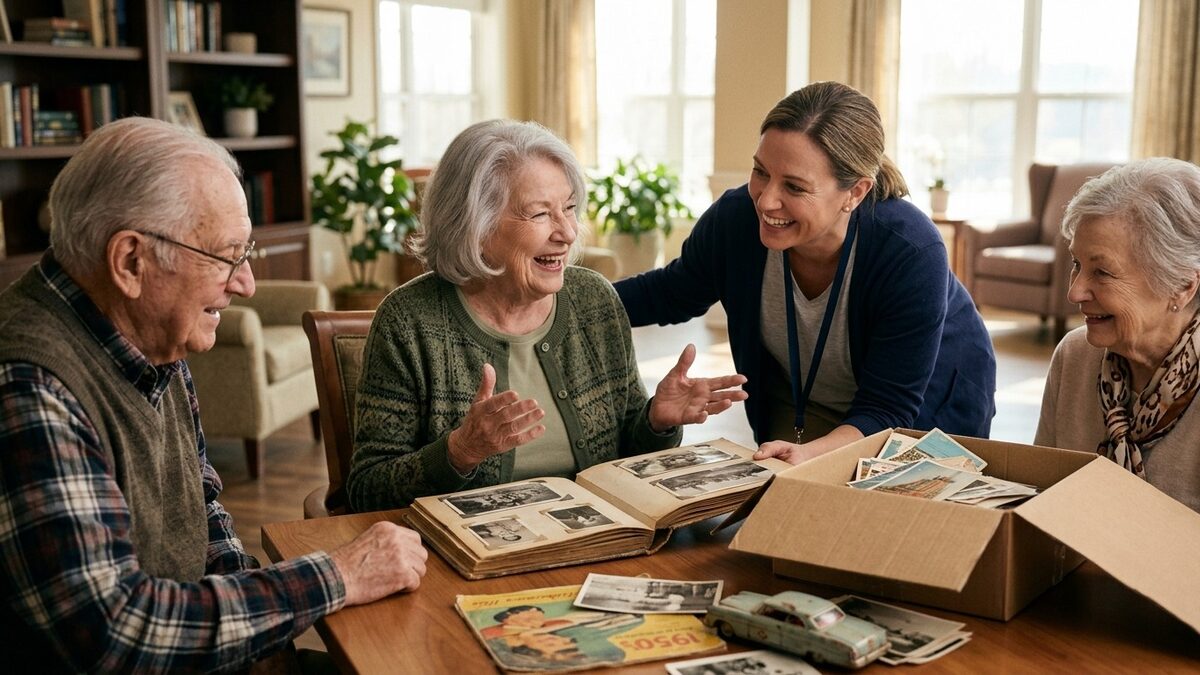
40 Sensory Activities for the Elderly and Dementia Patients (+ Printable Checklist)
November 14, 2026 · 9 min read
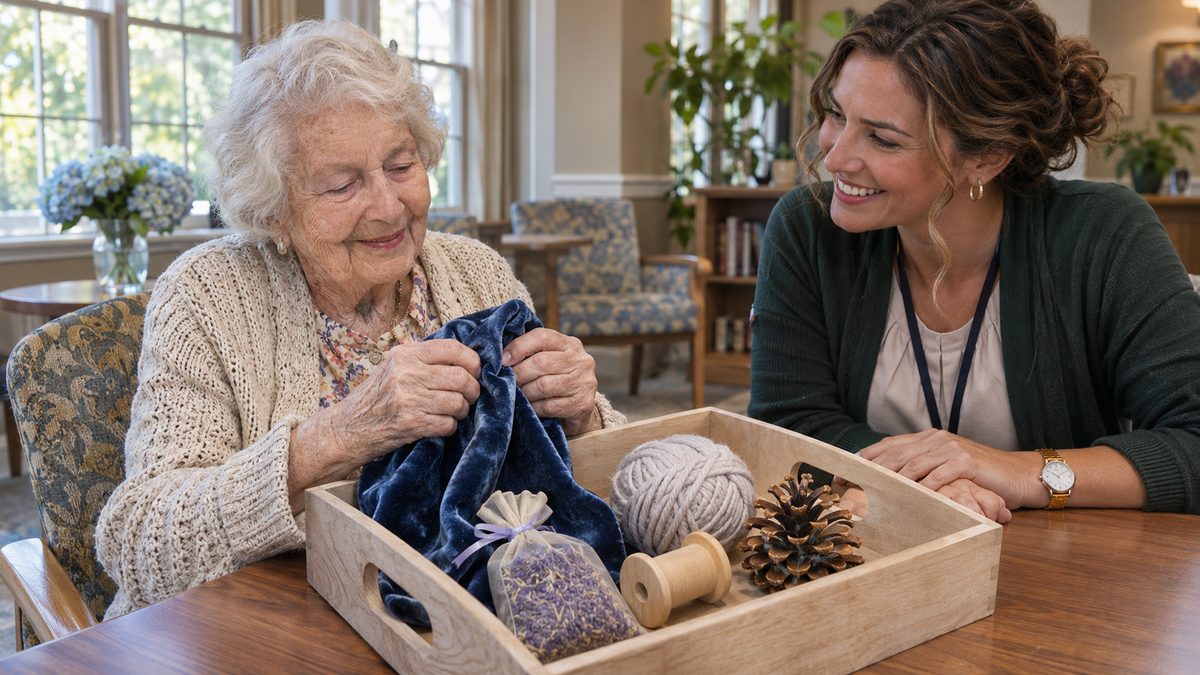
When conversation, reading and group games get harder, the senses still offer a way in. The softness of velvet, the smell of cinnamon or a song from someone’s twenties can bring a smile, a story or a moment of calm. Sensory activities are also some of the easiest to set up: a basket of fabric, a jar of coffee beans, a familiar record.
Here are 40 sensory activities for the elderly and dementia patients, organized by sense, plus five themed sensory box ideas, a guide by stage of dementia and the safety basics. All 40 are on a free printable sensory activity checklist (PDF) with a sensory box list and safety checklist.
Key takeaways
- 40 sensory activities for touch, smell, sound, sight, taste and movement.
- Familiar beats new: everyday objects, jobs and songs from early adulthood often work best.
- Research support is modest. Music has the best evidence; treat other sensory activities as comfort and engagement, not treatment.
- Safety first: items too big to swallow, tastes that match each diet order, and no undiluted essential oils.
- Free printable checklist with five sensory box ideas.
How to run a sensory activity
- Start with the person’s story. Ask families about past jobs, hobbies, music and favorite foods. A retired carpenter may light up at a workshop box, and a lifelong baker at a bowl of dough.
- Offer one sense and one item at a time. The Alzheimer’s Association advises avoiding sensory overload by shutting windows and doors and turning off the television (Alzheimer’s Association).
- Invite, don’t quiz. “Feel how soft this is” works better than “What is this?”
- Watch faces and hands. Smiles, relaxed shoulders and reaching for more mean keep going. Frowning, pushing items away or restlessness mean stop or switch.
- Keep it short. About 10 to 20 minutes works well one-on-one, a little longer in a small group.
- Write down what works on the checklist so other staff and families can repeat it.
Why sensory activities matter for older adults
Our senses change with age. The National Institute on Aging notes that about one third of older adults have some form of vision problems or loss by age 65, and nearly half of people older than 75 have disabling hearing loss (NIA). Activities that engage several senses at once, in good light and a quiet room, give everyone a better chance to take part.
For people living with dementia, sensory activities offer a way to connect that doesn’t depend on words. As the Alzheimer’s Association puts it, “Music provides a way to connect, even after verbal communication has become difficult” (Alzheimer’s Association). The NIA adds that the sense of smell is “closely linked with memory, possibly more so than any of our other senses” (NIA). That may be why the smell of baking bread or a pine branch in December can spark a memory.
What the research says
- Music has the strongest support. A 2025 Cochrane review found that at least five sessions of music-based therapy probably improve depressive symptoms and may improve overall behavioral problems at the end of treatment in people with dementia, though it found no evidence of long-term effects (Cochrane, 2025). These studies tested structured music sessions, so a casual sing-along may not have the same effect, but it’s still a pleasure for many residents.
- Multisensory programs have weaker support. A 2020 systematic review of sensory stimulation programs concluded that the evidence “weakly supports sensory stimulation in dementia” (Expert Review of Neurotherapeutics, 2020).
- Touch and massage need more research. An older Cochrane review concluded that massage and touch may complement other approaches for behavioral and emotional symptoms of dementia, but that more research is needed for definitive evidence (Cochrane, 2006).
- Aromatherapy is unproven. A 2020 Cochrane review found no convincing evidence that aromatherapy is beneficial for people with dementia (Cochrane, 2020).
In short, offer sensory activities because residents enjoy them and because they create moments of comfort and connection, not as a replacement for medical care.
40 sensory activities for older adults and people with dementia
Touch
- Fabric swatch book. Glue large squares of velvet, satin, corduroy, fleece and burlap into a binder or onto a board. Ask which one feels nicest, or what it reminds them of: a Sunday dress, a winter coat, a favorite blanket.
- Hand massage. Ask first, then use a little unscented lotion and slow, gentle strokes from the wrist to the fingertips. Skip skin that is broken, bruised, red or swollen, keep the pressure light on fragile skin, check the lotion for nut oils, and avoid petroleum-based lotions for residents who use oxygen.
- Warm towel folding. Bring a basket of towels or washcloths warm from the dryer (warm, not hot) and fold them together. It is a familiar, useful job, and the warmth is soothing.
- Pairing socks. Mix a pile of brightly colored, clearly different socks and match the pairs. Large, soft items are easy to grip and safe to handle.
- Fidget apron or activity blanket. A lap blanket or apron with securely sewn zippers, large buttons, Velcro tabs, ribbons and pockets keeps restless hands busy. Check the stitching often so nothing can come loose.
- Animal visit. A visit from a calm therapy animal, or a lifelike robotic cat or dog, gives residents something soft to stroke. Follow your community’s pet policy and check for allergies first.
- Kneading bread dough. During a baking session, give each resident a portion of real bread dough to knead on a floured board. Wash hands first, check for wheat allergies and watch closely, since raw dough and flour shouldn’t be eaten. The bread comes out of the oven later as a reward.
- Hand basin and washcloths. Set a basin of comfortably warm water on the table with a few washcloths and a pump bottle of mild liquid soap. Washing and wringing cloths can be calming, and many residents enjoy the familiar routine.
Smell
- Scent jars. Put coffee beans, cinnamon sticks, orange peel, whole cloves and dried lavender in small jars, seal each one with a lid that has small holes poked in it and is taped shut, and invite residents to name the scent if they like. Ask what each smell brings to mind.
- Baking day. Bake cookies, banana bread or cinnamon rolls where residents can smell them. Staff handle the oven; residents can stir, scoop and decorate.
- Flower arranging. Arrange fresh, fragrant flowers such as carnations or roses with the thorns removed in plastic vases. Skip lilies of the valley, daffodils, holly berries, mistletoe and other plants that are harmful if eaten.
- Herb potting. Pot basil, mint and rosemary in a tub of soil. Residents feel the soil, rub the leaves and smell the herbs, then care for the pots on a sunny windowsill. Offer gloves, and wash hands afterward.
- Seasonal scent basket. Fill a basket with the smells of the season: pine branches and peppermint tea bags in December, apples and cinnamon in fall, cut grass and lemon in summer. Pass items around and talk about the season.
- Coffee grinding. Grind coffee beans with a hand grinder and let everyone smell the fresh grounds, then share coffee (or decaf), served warm, not hot, together, following each resident’s diet order.
- Aromatherapy (with care). If your community allows it, use a diffuser with a single gentle scent such as lavender for a short session in a well-ventilated room. Never put undiluted essential oils on skin, keep bottles locked away, and skip it for anyone with asthma or allergies.
Sound
- Sing-along to familiar songs. Play songs from residents’ teens and twenties and sing together. Print large-type song sheets, or just hum along.
- Personal playlists. Ask families which songs a resident loved, then build a playlist they can hear on comfortable headphones. Watch for a tapping foot or a smile.
- Name that sound. Play short recordings of everyday sounds, such as a train whistle, a rooster, a doorbell, rain on a roof or a crackling fire, and guess what each one is.
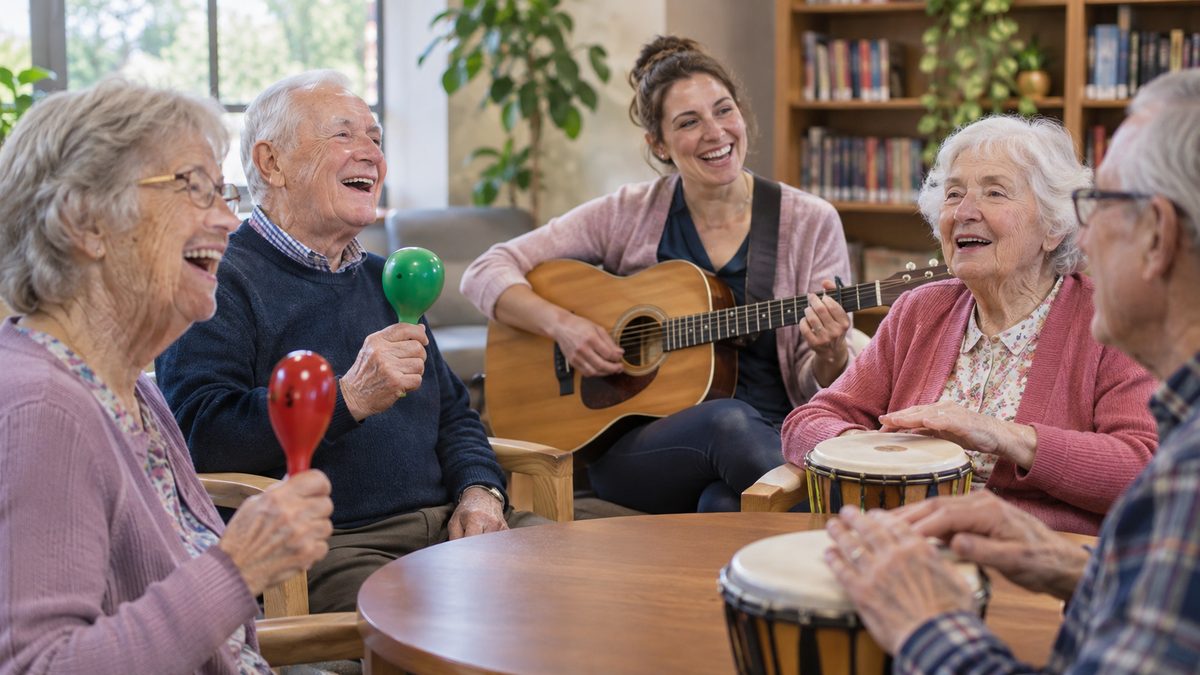
- Rhythm band. Hand out shakers, hand drums, tambourines and rhythm sticks and play along to a march or a polka. Everyone can join, and no musical skill is needed.
- Nature sounds. In a quiet room, play birdsong, ocean waves or a gentle stream at low volume. It works well before lunch or in the late afternoon.
- Poetry read-aloud. Read poems with a strong rhythm and rhyme aloud, such as “Stopping by Woods on a Snowy Evening” or “The Owl and the Pussy-Cat.” Invite residents to join in on lines they know.
- Hymn or spiritual sing. For residents who want it, sing familiar hymns or spiritual songs from their faith tradition. Ask families what they sang growing up.
Sight
- Bird feeder watching. Hang a feeder outside a lounge window and keep a large-print bird guide nearby. Talk about which birds come and what color they are.
- Picture books and photo cards. Share large, clear photos of classic cars, old movie stars, gardens, babies, animals or the hometown. Big coffee-table books work well.
- Aquarium or bubble tube. A fish tank or a bubble tube lamp with slowly changing colors gives residents something calm to watch, especially in the late afternoon.
- Color sorting. Sort large, colorful items such as silk scarves, yarn balls or plastic flowers into bowls by color.
- Slideshow on the TV. Put a slideshow of nature scenes, travel spots or a resident’s family photos on the big screen and talk about each one.
- Star projector. In the evening, dim the lights and turn on a star or night-sky projector with soft music to signal winding down for bed.
Taste
- Sweet, sour and salty tasting. Offer tiny tastes of different flavors, such as applesauce, a little lemon yogurt and a spoon of mashed potato, and talk about which one each person likes best. Match every item to each resident’s diet order and food texture.
- Ice cream social. Set up a sundae bar with two or three ice cream flavors and soft toppings, with sugar-free and texture-appropriate choices for residents who need them. Ice cream melts into a thin liquid, so check with the speech therapist for residents on thickened drinks.
- Fruit tasting. Try soft fruits such as banana and peeled peaches, cut into small pieces. Talk about where each fruit grows and favorite fruit desserts. Match each item to the resident’s diet order and food texture.
- Afternoon tea. Host a tea party with real cups and saucers, two or three teas and soft cookies. Serve tea warm, not hot, fill cups only halfway to prevent spills, and match each item to the resident’s diet order and drink thickness.
- Lemonade or smoothie making. Squeeze lemons or blend a fruit smoothie together. Residents can measure, stir and taste-test the result. Match each drink to the resident’s diet order and drink thickness.
- Holiday tasting. Taste the flavors of the season: pumpkin pie in November, peppermint pudding or soft peppermint cookies in December, a slice of king cake for Mardi Gras (remove the plastic baby or trinket first). Ask about family holiday recipes.
Movement and multisensory
- Themed sensory box. Fill a shallow box with large, safe objects around one theme (see the five boxes below) and explore it together, one item at a time.
- Seated ball toss. Toss a soft beach ball or textured sensory ball around a seated circle. Call out a color before each throw.
- Scarf dancing. Hand out light chiffon scarves and wave them to music, slow for a waltz and quick for a polka.
- Glider or rocking chair time. Gentle rocking in a glider or rocking chair while listening to music is soothing for many residents.
- Garden sit. Sit outdoors or by an open window and notice the sun, the breeze, birdsong and the smell of flowers or rain. Use sunscreen and hats, and come inside if it is too hot or cold.
- Quiet sensory corner. Set up a calm corner with soft lighting, a comfortable chair, a light lap blanket the resident can easily remove, gentle music and a basket of textures, where residents can rest when the day feels too busy.
5 sensory box ideas
A sensory box (sometimes called a rummage box) is a shallow box of safe, familiar objects around one theme. Residents can explore it alone or with a staff member, and it often sparks stories about work, home and hobbies.
| Box | What to put in it |
|---|---|
| Garden box | Silk flowers, clean flower pots, gardening gloves, a seed catalog, a watering can (empty) and a large pinecone |
| Sewing box | Large spools of thread, fabric scraps, a measuring tape, an empty pincushion, a ball of yarn with a finished knitted swatch and a pattern book |
| Workshop box | A wooden block, a large nut and bolt screwed together, a paint brush, a tape measure, sandpaper and a carpenter’s pencil |
| Beach box | Large seashells, a beach towel, sunglasses, a sun hat, a postcard of the ocean and a sandwich-size bag of sand, zipped and taped shut |
| Kitchen box | Wooden spoons, a whisk, measuring cups, a rolling pin, a recipe card in large print and a clean dish towel |
- Match the box to the person. A former nurse, mechanic, teacher or farmer will each recognize different objects.
- Check every item. Nothing small enough to fit in the mouth, no sharp edges and no loose parts such as buttons, beads, coins or marbles.
- Clean and rotate. Wipe hard items between residents, launder fabric items or keep one set per resident, and swap a few items each month so the box stays interesting.
Sensory activities by stage of dementia
| Stage | What tends to work | Try |
|---|---|---|
| Early | Activities with a purpose and a choice | Baking day, herb potting, flower arranging, personal playlists, picture books |
| Middle | Simple, guided steps with familiar objects | Sensory boxes, pairing socks, warm towel folding, scent jars, rhythm band |
| Late | Comfort-focused, one-on-one time | Hand massage, familiar music, a soft blanket, rocking, nature sounds |
Stages are only a rough guide. Follow the person in front of you on that day.
Sensory activities for one-on-one visits
For residents who stay in their rooms or in bed, a short sensory visit can be the highlight of the day. Bring a small kit: unscented lotion for a hand massage, headphones with a personal playlist, a scent jar, a fabric swatch, a book of large photos and a warm blanket from the dryer. Sit at eye level, say who you are and what you’d like to do, and let the resident choose. Our guide to activities for seniors with limited mobility has more bedside ideas.
Safety tips for sensory activities
- Choking. The Alzheimer’s Association warns that in the middle and late stages of Alzheimer’s, swallowing problems can lead to choking and weight loss (Alzheimer’s Association). Every taste activity should follow each resident’s diet order and prescribed food and drink textures, so check with nursing and dietary staff first.
- Essential oils. The National Capital Poison Center notes that the most common allergic reaction to essential oils is a skin rash, and that some oils can be poisonous if swallowed or absorbed through the skin (Poison Control). Follow your community’s policy, never apply undiluted oils to skin and keep bottles locked away.
- Temperature. Water, towels and drinks should be warm, not hot. Test water on your own wrist first.
- Allergies. Check for food, flower, latex, animal and fragrance allergies before each activity.
- Hygiene. Wash hands before and after, and clean shared items between residents.
- Overstimulation. One activity at a time in a quiet room. If someone seems upset, stop and offer something calming instead.
More memory care activities
Pair sensory activities with our calming activities for dementia patients, games for dementia patients, reminiscence therapy activities and the large-print sheets in our free printable activities for dementia patients. For a sing-along, try our music trivia for seniors.
Plan sensory activities in minutes
ActivityBuilder’s activity calendar builder includes 580+ ready-to-run activities, including sensory and memory care ideas, so you can fill a month of programming in minutes. Start a free trial.
Frequently Asked Questions
What are sensory activities for the elderly?+
Sensory activities engage touch, smell, sound, sight or taste, such as feeling different fabrics, smelling scent jars, listening to familiar music, watching birds at a feeder or tasting a favorite treat. They are easy to adapt for any ability level.
What are good sensory activities for dementia patients?+
Familiar, simple activities work best: a themed sensory box, folding warm towels, pairing socks, a hand massage with unscented lotion, a personal playlist, scent jars with coffee or cinnamon, and a sensory corner with soft light and music.
What do you put in a sensory box for dementia?+
Large, safe, familiar objects around one theme, such as gardening gloves and silk flowers for a garden box or wooden spoons and a whisk for a kitchen box. Avoid anything small enough to fit in the mouth, sharp edges and loose parts.
Do sensory activities help people with dementia?+
Research support is modest. Music has the strongest evidence, with a 2025 Cochrane review finding it probably improves depressive symptoms at the end of treatment. Evidence for multisensory programs and massage is weaker, and aromatherapy has no convincing evidence. Many residents simply enjoy them, which makes them worthwhile.
How long should a sensory activity last?+
About 10 to 20 minutes one-on-one, or a little longer in a small group. Stop sooner if the person seems tired, restless or upset.
Stop planning from scratch
ActivityBuilder gives you 580+ ready-to-use activities, 30+ in-browser games, and a drag-and-drop calendar builder — everything in this article, done for you.
Start your 7-day free trial →