Dementia & Memory Care Activities for Seniors: A Practical Guide
June 16, 2026 · 8 min read

For residents living with dementia, well-chosen activities do far more than fill the day. They reduce agitation, restore a sense of purpose, and open doors to connection when words become difficult. The key is matching the activity to the person’s current abilities — not to who they used to be, and not to a one-size-fits-all schedule.
This guide covers the activity types that work most reliably in memory care, plus how to adapt them as needs change.
Sensory activities
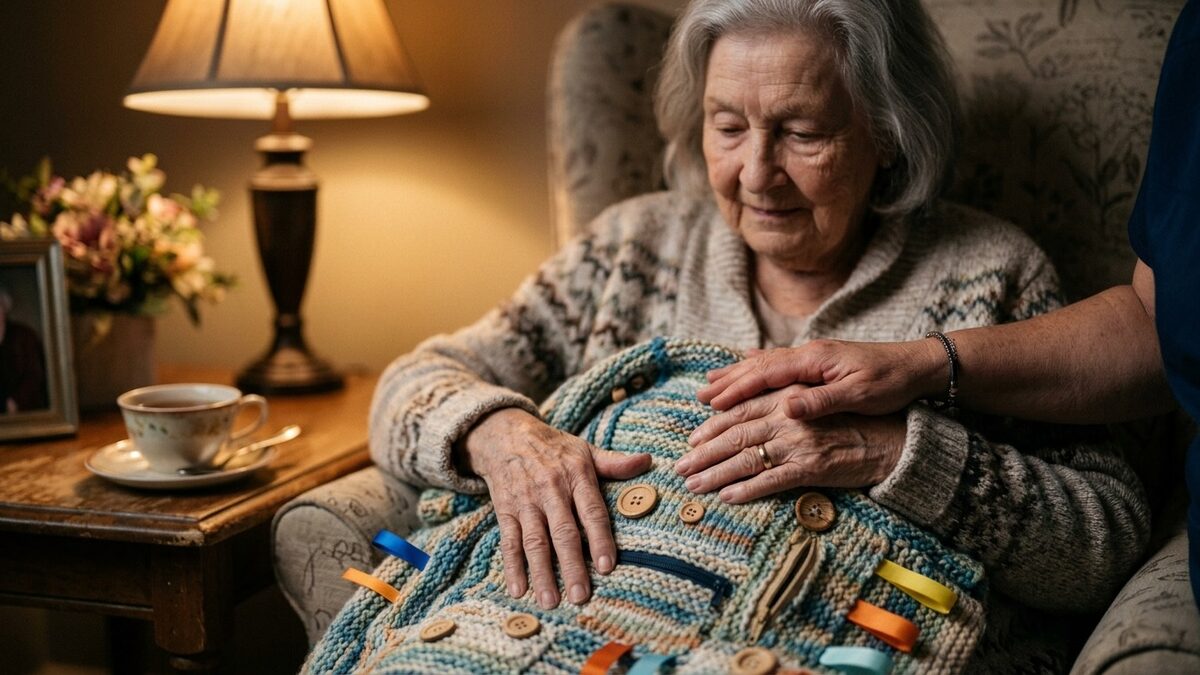
Sensory stimulation reaches residents even in later stages. Try texture boards, scented hand lotion and aromatherapy, warm towels, fidget muffs, weighted lap blankets, and bowls of items to sort by color or shape. These calm the nervous system and give restless hands something to do.
Music and movement
Music is often the last thing to fade. Build playlists from each resident’s young-adult years (roughly ages 15–25), run gentle sing-alongs, add rhythm instruments, or pair music with seated movement. Many residents who rarely speak will sing every word of a familiar song.
Reminiscence activities
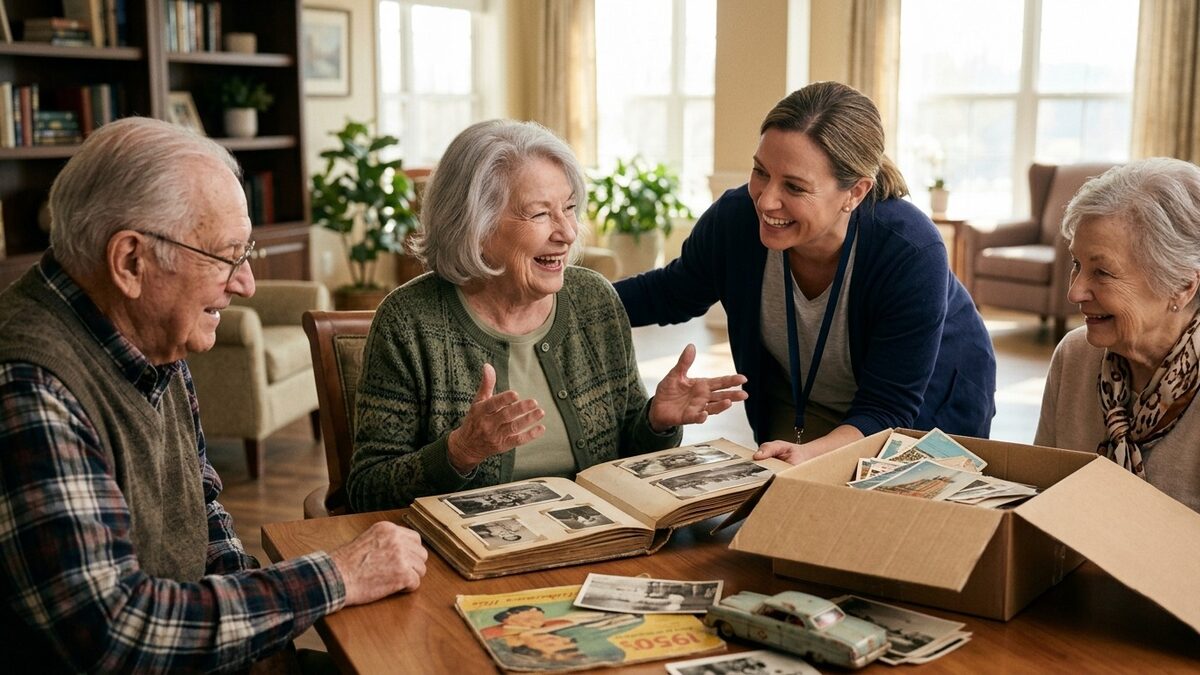
- Memory boxes filled with objects from a familiar era or hobby
- Themed photo books — weddings, gardens, cars, cooking
- “Tell me about” prompts tied to old recipes, jobs, or hometowns
- Folding and sorting — towels, socks, or playing cards
Simple games and tabletop activities
Choose fail-proof games with no losing and no complex rules: large-piece puzzles, picture bingo, matching games, dominoes, and balloon volleyball. ActivityBuilder’s in-browser games library includes picture bingo and memory-match designed specifically for cognitive support. Our guides to memory games for seniors — with a fail-proof memory-care level — and games for seniors include many more dementia-friendly picks.
How to adapt activities by stage
- Early stage: keep familiar hobbies going — gardening, card games, book clubs — with light support.
- Middle stage: shorten activities, simplify steps, and emphasize sensory and music-based engagement.
- Late stage: focus on one-to-one sensory comfort — hand massage, soft music, familiar scents, and gentle touch.
Tips to reduce agitation
- Run demanding activities in the morning when residents are freshest.
- Keep groups small and the room calm — reduce noise and clutter.
- Offer choices, never tests. Remove anything that highlights what a resident can no longer do.
- Follow the resident’s lead; if they disengage, switch gears without pressure.
Looking for more low-prep ideas? Our craft activities guide includes a memory-care section, and the calendar builder makes it easy to balance stimulating and calming activities across the week.
Frequently Asked Questions
What sensory stimulation activities are good for seniors with dementia?+
Texture and fidget boards, scented lotions and aromatherapy, warm towels, weighted lap blankets, and sorting bowls all provide calming sensory input. These engage residents even in later stages when verbal activities become difficult.
How do you plan activities for seniors with dementia?+
Match the activity to the resident’s current stage, keep sessions short and fail-proof, schedule demanding tasks in the morning, and lean on music and sensory engagement. Always offer choices rather than tests, and follow the resident’s lead.
Why are activities important for seniors with dementia?+
Purposeful activities reduce agitation and wandering, support remaining cognitive and physical abilities, and create moments of connection and dignity. Engagement — not achievement — is the goal.
Stop planning from scratch
ActivityBuilder gives you 580+ ready-to-use activities, 30+ in-browser games, and a drag-and-drop calendar builder — everything in this article, done for you.
Start your 7-day free trial →