Calming Activities for Dementia Patients: 25 Sensory Ideas for Anxiety & Sundowning
October 2, 2026 · 8 min read
Restlessness, pacing, repeated questions and late-afternoon confusion are some of the hardest moments in dementia care, for residents and staff alike. The right calming activity, offered at the right moment, can turn a tense hour into a peaceful one. Most of the best options are simple, sensory, and cost almost nothing.
This guide gives you 25 calming and sensory activities for dementia patients, plus how to spot triggers and set up a calm space. For the bigger picture of memory care programming, see our dementia activities for seniors guide.
Key takeaways
- "Sundowning" is when restlessness, agitation and confusion increase in the late afternoon or early evening, as daylight begins to fade.
- The National Institute on Aging recommends routines, less noise and clutter, soothing music, familiar objects and daylight to help prevent agitation.
- Sensory activities work through touch, sound, smell, sight and movement, so they don't depend on memory.
- Look for the cause first: pain, hunger, boredom, noise or tiredness can all trigger agitation.
Why calming activities matter
When restlessness, agitation, irritability and confusion get worse as daylight begins to fade, it's known as sundowning, according to the National Institute on Aging (NIA). To prevent and ease these moments, NIA suggests keeping to a routine, reducing noise and clutter, playing soothing music, keeping well-loved objects and photos nearby, and letting in natural light during the day (National Institute on Aging).
Calming activities put that advice into practice. They give restless hands something to do, shift attention away from distress, and replace an overwhelming environment with a simple, pleasant focus.
Touch and hands-on activities
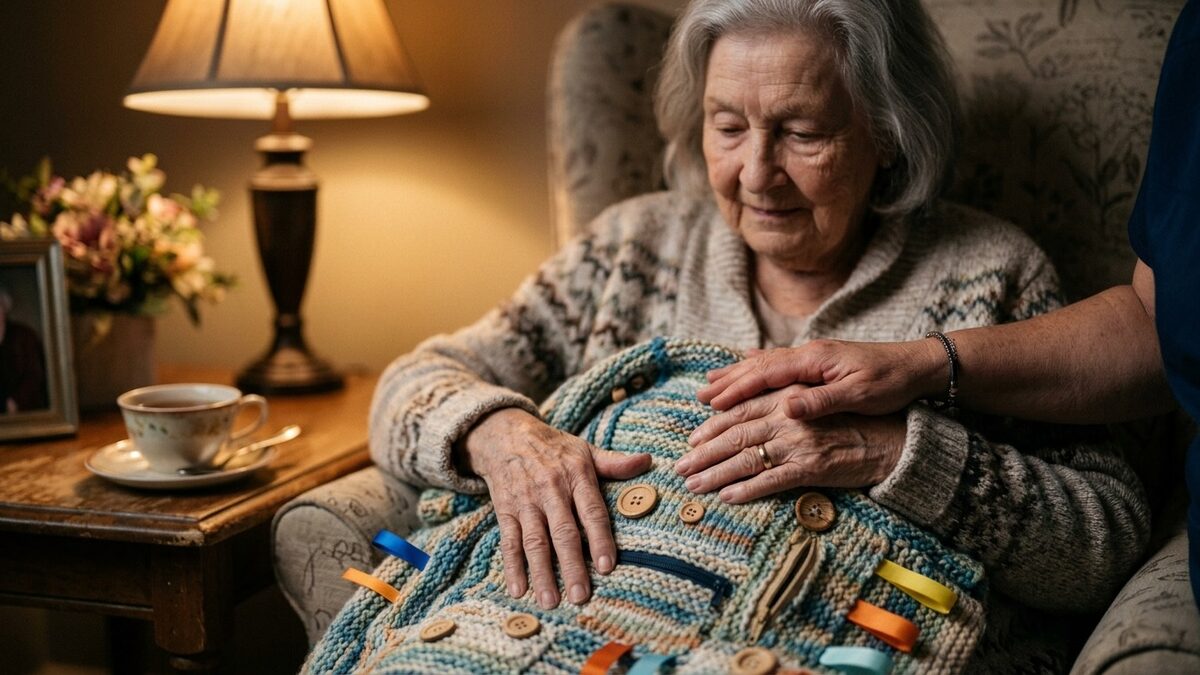
- Fidget blankets or muffs. Knitted pads with buttons, zippers, ribbons and textures for busy hands.
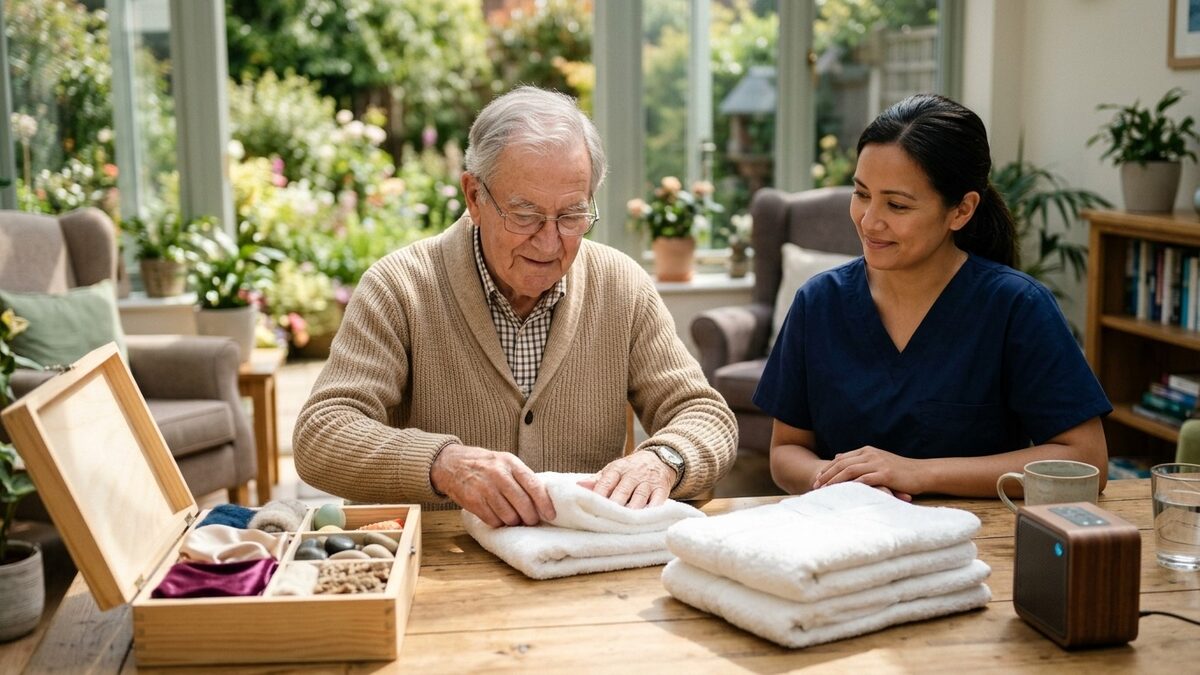
- Folding towels or washcloths. A familiar, purposeful task. Towels warm from the dryer add comfort; check they're warm, not hot.
- Hand massage with lotion. Slow, gentle strokes with an unscented or lavender lotion.
- Sorting objects. Buttons, large beads, socks or silverware sorted into a muffin tin or tray.
- Kneading dough or clay. Play dough or bread dough gives steady, soothing pressure.
- Stroking a soft toy or robotic pet. Many people find a soft or lightly weighted plush animal comforting.
- Winding yarn. Rolling a ball of yarn is rhythmic and calming for former knitters.
Sound and music activities
- Personal playlists. Songs from the resident's teens and twenties, on headphones or a small speaker.
- Nature sounds. Rain, ocean waves or birdsong at low volume.
- Humming or singing together. Familiar hymns and old standards often come back easily.
- Reading aloud. Poems, psalms or short stories in a slow, warm voice.
- Gentle rhythm. Tapping a soft drum or shaker along to slow music.
Sight and smell activities
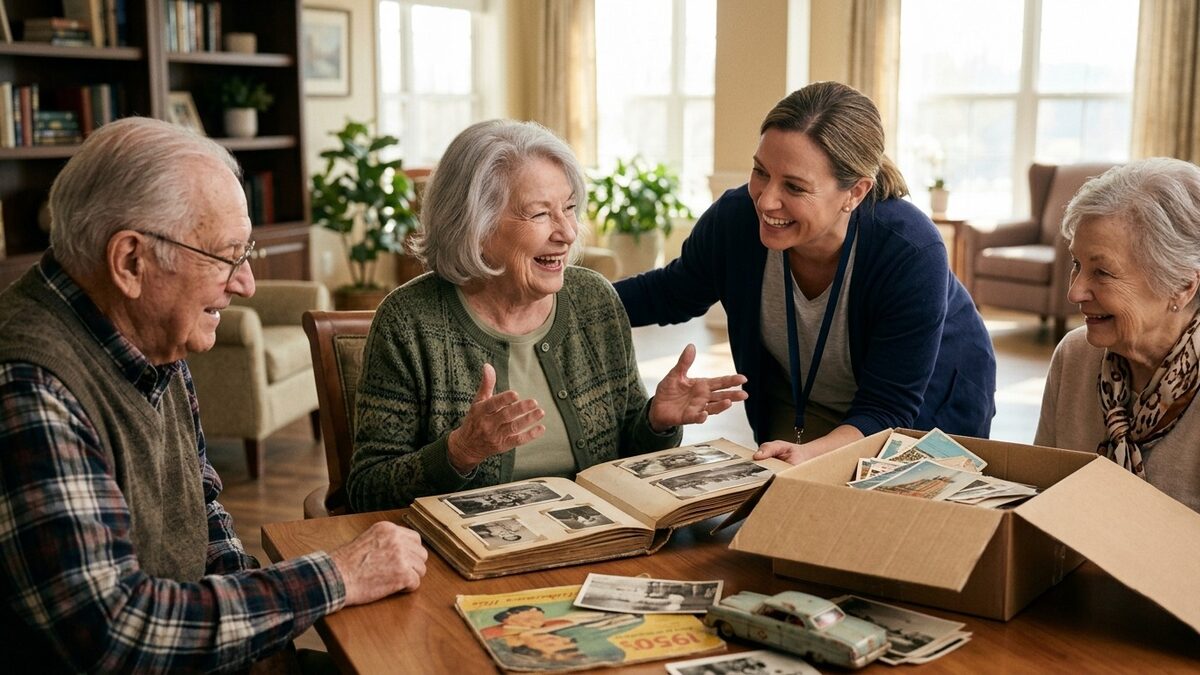
- Photo albums and memory books. Family photos, old cars, pets and places they lived.
- Watching nature. A bird feeder outside the window, or a fish tank.
- LED bubble tubes or color-changing sensory lights. Slow movement and soft color draw the eye. Choose cool-to-touch, shatterproof options.
- Calm videos. Aquarium, fireplace or garden scenes on the TV, with the sound low or off.
- Familiar scents. Lavender, vanilla, baking bread, coffee, or a favorite perfume on a cotton ball.
- Flower arranging. Handling and smelling real flowers is gentle and rewarding.
Movement and outdoor activities
- A slow walk. A short loop of a garden or hallway, arm in arm.
- Rocking chair or glider. Gentle, repetitive motion is soothing for many residents.
- Seated stretching. Slow arm raises and shoulder rolls to calm music. See our chair exercises for seniors.
- Watering plants. A simple job with a clear beginning and end.
- Sitting in daylight. Time on a porch or by a sunny window; letting in natural light during the day is one of NIA's tips for easing sundowning.
- Sweeping or dusting. Familiar household tasks give a sense of purpose.
- Balloon tapping. Slow, gentle passes back and forth in a quiet room.
How to calm an agitated resident
- Check basic needs first. Pain, hunger, thirst, a full bladder, being too hot or cold, and tiredness can all trigger agitation.
- Lower the stimulation. Turn down the TV, move to a quieter space, and limit the number of people nearby.
- Stay calm yourself. Speak slowly and softly, get down to eye level, and don't argue or correct.
- Validate the feeling. "You seem worried. I'm here with you." Feelings matter more than facts.
- Redirect gently. Offer a calming activity from this list, a favorite snack, or a short walk.
- Write down what worked. Share it at shift change so the whole team can use it.
Activities to help with sundowning
Plan the late afternoon as carefully as the morning. Schedule more active programs earlier in the day, then switch to quieter activities from about 3 p.m. Turn on lights before it gets dark, close curtains to cut shadows, and play calm music. A predictable "wind-down hour" with folding, music, photo albums or a hand massage can make evenings much easier. Avoid caffeine late in the day.
Set up a calm corner
| Sense | What to include |
|---|---|
| Touch | Fidget blanket, soft throw, textured fabric squares, smooth stones |
| Sound | Small speaker with personal playlists and nature sounds |
| Sight | Soft lamp, photo albums, a window view or a bubble tube |
| Smell | Lavender or familiar scents (check for allergies first) |
| Comfort | A supportive armchair or glider, a light blanket, water within reach |
Keep the corner tidy, uncluttered and always stocked, so any staff member can use it in the moment.
Safety notes
- Avoid small items that could be swallowed, and supervise sorting activities.
- Check scents and lotions for allergies and skin sensitivity, and check for latex allergies before using balloons.
- Keep the volume low and watch for signs that an activity is adding stress, not relieving it.
- Talk with the care team if agitation is new, sudden or getting worse, since it can signal pain or an infection.
Bring calm to the whole community
ActivityBuilder TV can show Photo Memories and your daily schedule on your facility screens, and you can plan a daily wind-down hour on your activity calendar alongside your livelier programs, including gentle games for dementia patients. Start a free trial and build calmer afternoons into every week.
Frequently Asked Questions
What are calming activities for dementia patients?+
Calming activities include fidget blankets, folding towels, hand massage, sorting objects, personal music playlists, nature sounds, looking at photo albums, watching a fish tank or bird feeder, familiar scents like lavender, and slow walks or rocking.
What are sensory activities for dementia patients?+
Sensory activities engage touch, sound, sight, smell and movement rather than memory: textured fabrics, kneading dough, music and rhythm, photo albums, bubble tubes, scent guessing, flower arranging, and gentle movement.
How do you calm someone with dementia who is agitated?+
Check basic needs like pain, hunger and toileting first, lower noise and activity around them, speak slowly and calmly, validate their feelings instead of correcting them, and gently redirect to a soothing activity or a short walk.
What helps with sundowning?+
The National Institute on Aging suggests keeping a routine, reducing noise and clutter, playing soothing music, keeping familiar objects nearby, and letting in natural light during the day. Plan quieter activities from mid-afternoon and turn lights on before dusk.
What should be in a sensory box for dementia?+
A sensory box can hold textured fabric squares, smooth stones, a soft brush, scented cotton balls, large beads to sort, a small photo album, and a familiar object from the person’s past. Avoid anything small enough to swallow.
Stop planning from scratch
ActivityBuilder gives you 580+ ready-to-use activities, 30+ in-browser games, and a drag-and-drop calendar builder — everything in this article, done for you.
Start your 7-day free trial →