Reminiscence Therapy Activities: 30 Ideas for Seniors and Memory Care
October 8, 2026 · 9 min read
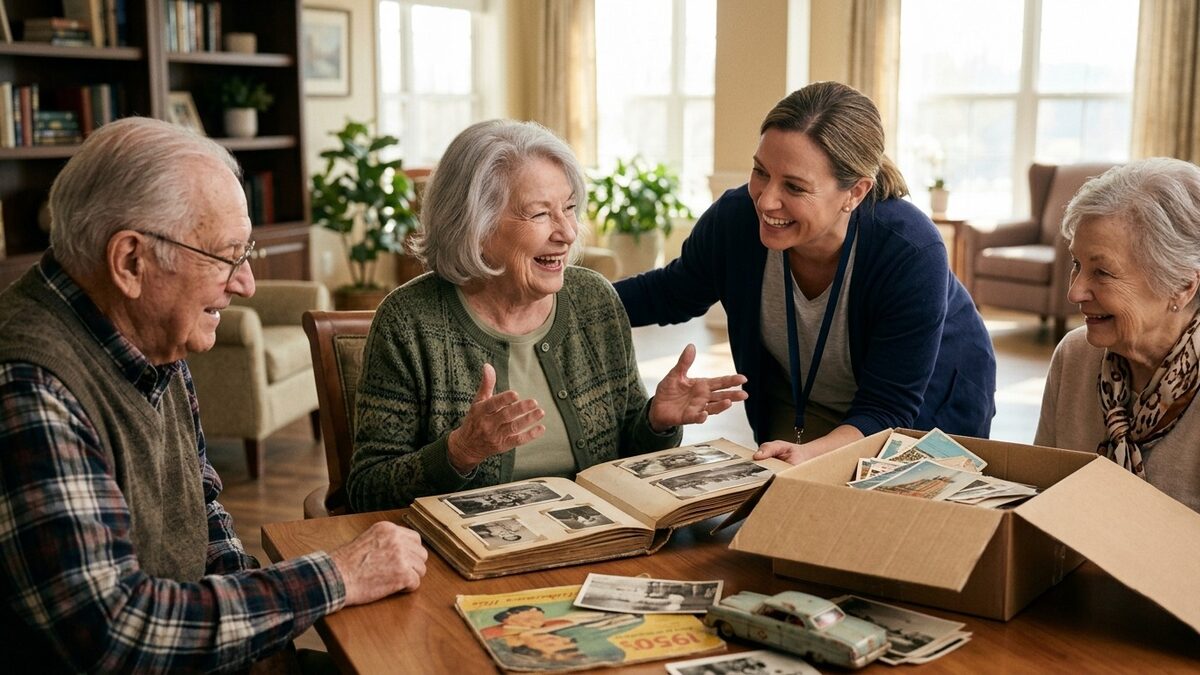
Ask a resident about the first car they drove, the dance hall where they met their spouse, or the smell of their mother’s kitchen, and you can watch the room change. That’s reminiscence: using photos, objects, music and conversation to bring back memories from earlier in life and share them with others.
This guide gives you 30 reminiscence therapy activities for group sessions, one-to-one visits and memory care, plus a simple session plan, monthly themes, and an honest look at what the research shows. For broader memory care programming, see our guide to dementia activities for seniors.
Key takeaways
- Reminiscence therapy means discussing past experiences with the help of prompts like photos, objects and music.
- The UK’s national dementia guideline (NICE NG97) says to consider group reminiscence therapy for people living with mild to moderate dementia.
- A 2018 Cochrane review of 22 studies found small benefits that vary by setting. Care home studies showed the widest range of benefits, and no harmful effects were found for people with dementia.
- Long-ago memories often stay stronger than recent ones, so reminiscence plays to residents’ strengths.
What is reminiscence therapy?
Reminiscence therapy (RT) involves talking about memories and past experiences with other people, using tangible prompts such as photographs or music to bring memories back and get conversation going. It can be done in a group or one-to-one, where it often produces a life story book. That is how the authors of the main Cochrane review describe it (Woods et al., Cochrane Database of Systematic Reviews, 2018).
It suits senior living well because, as the same review notes, people with dementia typically have a better memory for the distant past than for recent events. Reminiscence works with what residents still remember, not against what they have lost. It also works for residents without dementia: life stories are a natural way to build friendships in a new community.
What does the research say?
The 2018 Cochrane review included 22 randomized trials with 1,972 people with dementia. The authors concluded that reminiscence has some positive effects on quality of life, cognition, communication and mood, but that the effects are inconsistent, often small, and differ a lot by setting and format. Care home studies showed the widest range of benefits. One-to-one reminiscence was linked to probable benefits for cognition and mood, and group reminiscence to probable improvements in communication. The review found no evidence of harmful effects on people with dementia (Cochrane, 2018).
The UK’s National Institute for Health and Care Excellence recommends that providers “consider group reminiscence therapy for people living with mild to moderate dementia,” and to offer a range of activities tailored to each person’s preferences (NICE guideline NG97).
In practice: treat reminiscence as a valuable, low-risk part of a varied calendar, not a cure. Its biggest payoff is often in the moment: conversation, laughter and residents feeling known.
Group reminiscence activities
- Decade discussion groups. Pick one decade per session (the 1950s, 1960s) and talk through music, prices, fashion and news.
- “Firsts” circle. First job, first car, first home, first paycheck. Everyone has a story.
- Old-time radio hour. Play a classic radio show or comedy routine, then talk about where everyone listened.
- Songs and stories. Play hits from residents’ teens and twenties and ask what each song brings back. Skip the scoring; the stories are the point.
- School days. Chalkboards, spelling bees, favorite teachers and walking to school.
- Vintage advertisement show-and-tell. Print old magazine ads and compare prices and products to today.
- Hometown map. Put a large map on the wall and pin where each resident grew up. Then share one memory of each place.
- Wedding stories. Invite residents to bring wedding photos, or talk about how they met.
- Kitchen memories. Talk through a family recipe, then make a simple version together. Check diets, allergies and swallowing plans first.
- Work and trades panel. A farmer, a nurse, a mechanic and a teacher each explain how their job was done back then.
- Reminiscence trivia. Easy, unscored questions about past decades, used as story starters rather than a test. Our trivia for seniors list has questions by decade.
One-to-one reminiscence activities
- Life story book. Build a simple book of photos with short captions in the resident’s own words: childhood, family, work, proudest moments.
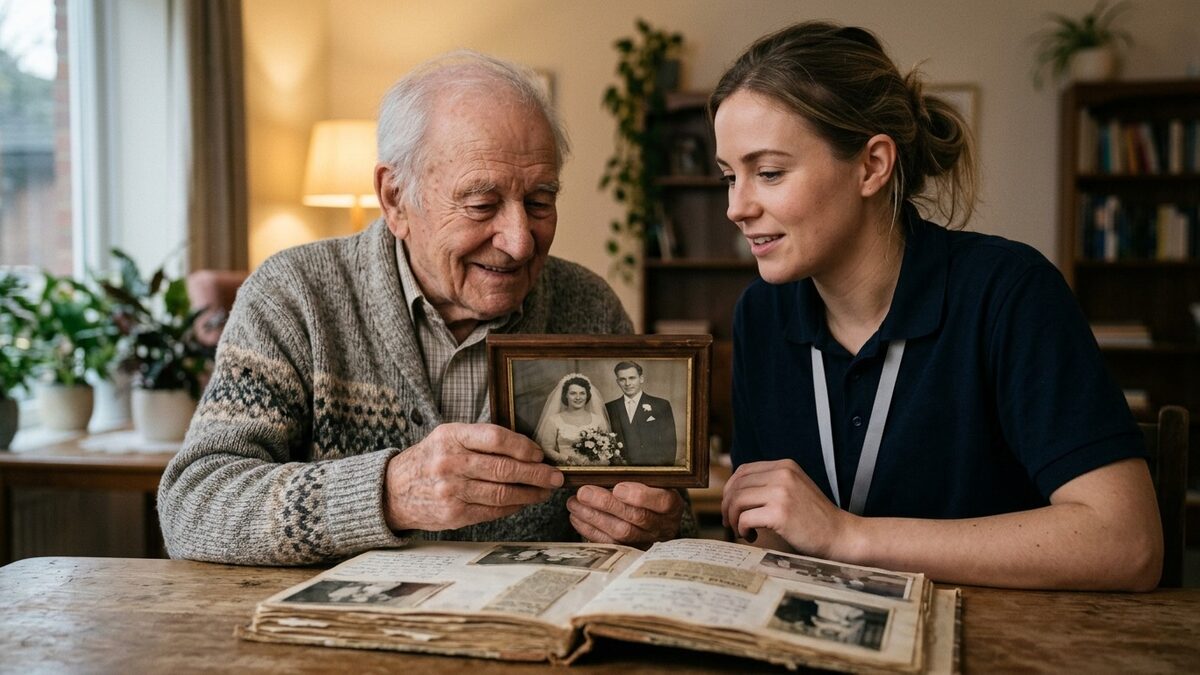
- Photo album walk-through. Turn the pages slowly and let the resident lead. Ask “Tell me about this” rather than “Who is this?”
- Recorded memories. With permission, record a resident telling a favorite story and share it with family.
- Memory jar. Write one memory on a slip of paper each visit and add it to a jar to reread later.
- “Then and now” photos. Show a photo of their hometown main street years ago next to one from today.
- Letter to a grandchild. Help a resident write or dictate advice and memories for a younger relative.
- Personal playlist. Build a playlist of songs from the resident’s youth and listen together.
- Hobby revisit. Bring out items from a former hobby, like yarn and a finished scarf, a sewing pattern or a fishing reel (no hooks), and talk about it.
Sensory reminiscence: memory boxes, scents and tastes
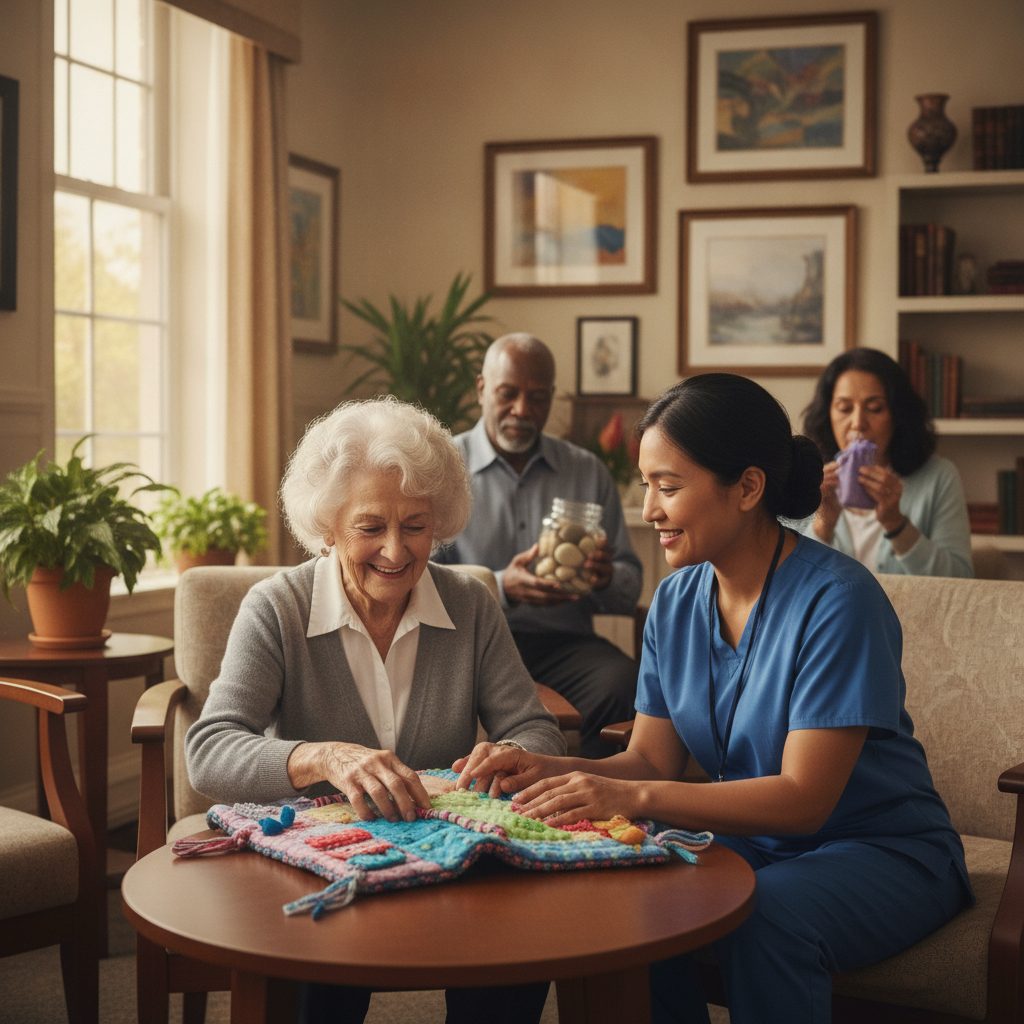
- Themed memory boxes. Fill boxes with large, safe objects around one theme: the seaside, the office, the farm, baby care, sewing. Leave out anything sharp, breakable or small enough to swallow.
- Scent memories. Coffee, baby powder, cinnamon, fresh-cut grass or a classic soap on a cotton ball.
- Taste of the past. Soft vintage treats (no hard candy), root beer floats or a regional favorite. Check diets and swallowing plans first.
- Fabric and clothing. Handle a vintage hat, gloves, a tie or a handkerchief and talk about getting dressed up.
- Household objects. A rotary phone, a washboard, an old camera or a typewriter for “What was this for?”
- Sounds of the past. A train whistle, a school bell or church bells can bring back strong memories.
Reminiscence for memory care and later stages
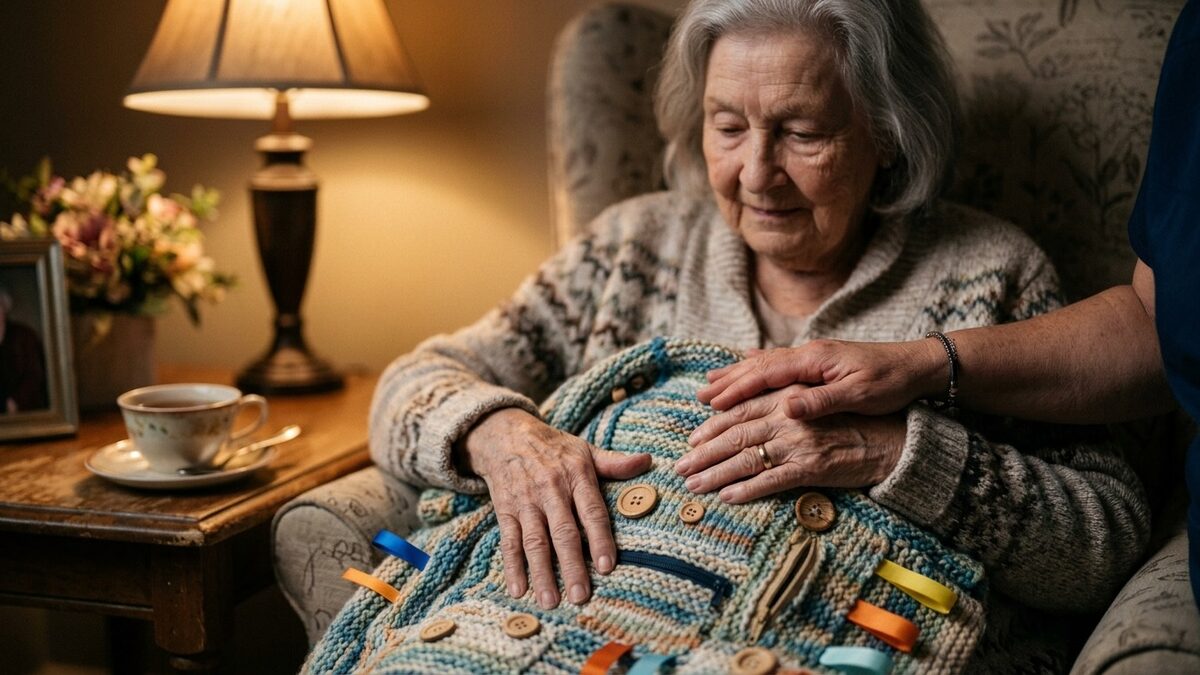
- Familiar tasks. Folding laundry, matching socks or buffing shoes with a soft cloth (no polish) can reconnect with old routines without needing words.
- Photo cards on the table. Large, clear photos of dogs, babies, flowers or old cars invite simple comments.
- Singing old songs. Hymns, lullabies and old standards often come back even when conversation is hard.
- Doll or baby care. For some residents, holding and caring for a doll recalls parenting in a comforting way. Offer it, never force it.
- Photo Memories on screen. A slideshow of residents’ own family photos on the lounge TV invites spontaneous stories.
How to run a reminiscence session: step by step
- Pick one theme. A focused theme like “summer holidays” works better than “the old days.”
- Gather 4 to 6 prompts. Photos, objects, a song, a scent. Have more than you need.
- Keep the group small. Six to eight residents lets everyone speak. Seat quieter residents close to you.
- Open with a sensory prompt. Pass an object around or play a song before asking questions.
- Ask open questions. “What do you remember about…?” and “What was it like?” invite stories. Avoid quiz-style questions that test memory.
- Follow the energy. If the group drifts to another topic and it’s going well, go with it.
- Close warmly. Thank people for their stories and note anything worth adding to a resident’s life story or care plan.
Thirty to forty-five minutes is plenty for most groups. Weekly sessions with a different theme each time keep it fresh, and repeating favorite themes is fine.
12 monthly reminiscence themes
| Month | Theme | Prompt ideas |
|---|---|---|
| January | Winters past | Sledding, snow days, wood stoves |
| February | Love stories | Wedding photos, first dates, love songs |
| March | School days | Report cards, lunch boxes, favorite teachers |
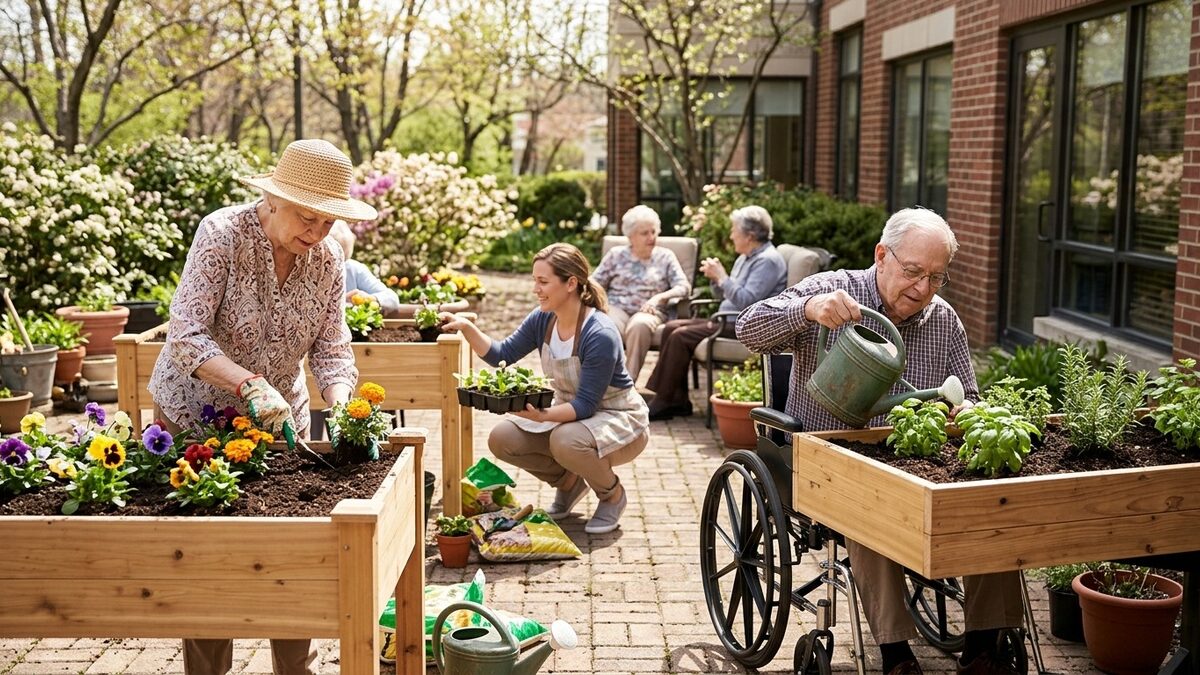
| April | Gardens and farms | Seed packets, fresh soil, farm tools |
| May | Mothers and family | Family photos, recipes, lullabies |
| June | Weddings and graduations | Veils, diplomas, dance music |
| July | Summer holidays | Beach towels, postcards, picnics |
| August | Cars and road trips | Old maps, car ads, drive-in movies |
| September | Work and trades | Tools, uniforms, first paychecks |
| October | Harvest and home | Canning jars, apples, Halloween costumes |
| November | Service and gratitude | Military photos, thank-you notes |
| December | Holiday traditions | Ornaments, holiday foods, carols |
Seasonal posts like our fall activities for seniors and Christmas activities for seniors have more theme ideas you can turn into reminiscence sessions.
Handling difficult memories
Not every memory is happy. Loss, war, poverty or a difficult marriage can come up, and the Cochrane authors note that some memories may be distressing or traumatic. A few habits help:
- Learn residents’ histories from families and care plans before choosing themes.
- If someone becomes upset, acknowledge the feeling (“That sounds like a really hard time”) instead of changing the subject abruptly.
- Gently move to a comforting topic or object once the person feels heard.
- Let staff know about lasting distress so the care team can follow up.
- Never pressure anyone to share. Listening is participating too.
Make reminiscence a regular part of your calendar
Reminiscence works best as a steady habit, not a once-in-a-while event. With ActivityBuilder you can schedule a weekly reminiscence hour on your activity calendar, and ActivityBuilder TV can show Photo Memories on your facility screens. Pair it with memory games and calming activities for a balanced memory care week. Start a free trial to plan your next month of themes.
Frequently Asked Questions
What are reminiscence therapy activities?+
Reminiscence therapy activities use prompts like photos, objects, music, scents and conversation to help people recall and share memories from earlier in life. Examples include decade discussion groups, life story books, memory boxes, old-time radio hours and singing old songs.
Does reminiscence therapy work for dementia?+
A 2018 Cochrane review of 22 trials found small, inconsistent benefits for quality of life, cognition, communication and mood that varied by setting and format. Care home studies showed the widest range of benefits, and no harmful effects were found for people with dementia. NICE guidance says to consider group reminiscence therapy for mild to moderate dementia.
What is a memory box for dementia?+
A memory box is a container of safe, familiar objects around one theme, such as the seaside, sewing or a former job, used to prompt conversation. Include large items that are easy to handle and avoid anything small enough to swallow.
How long should a reminiscence session last?+
Thirty to forty-five minutes suits most groups. Keep groups to six to eight people so everyone can speak, and repeat favorite themes often.
What if a memory upsets someone?+
Acknowledge the feeling calmly, let the person feel heard, then gently move to a comforting topic or object. Tell the care team about any lasting distress. Learning residents’ histories beforehand helps you avoid painful themes.
Stop planning from scratch
ActivityBuilder gives you 580+ ready-to-use activities, 30+ in-browser games, and a drag-and-drop calendar builder — everything in this article, done for you.
Start your 7-day free trial →