Outdoor Activities for Seniors: 30 Ideas for Senior Living (Including Limited Mobility)
October 8, 2026 · 8 min read
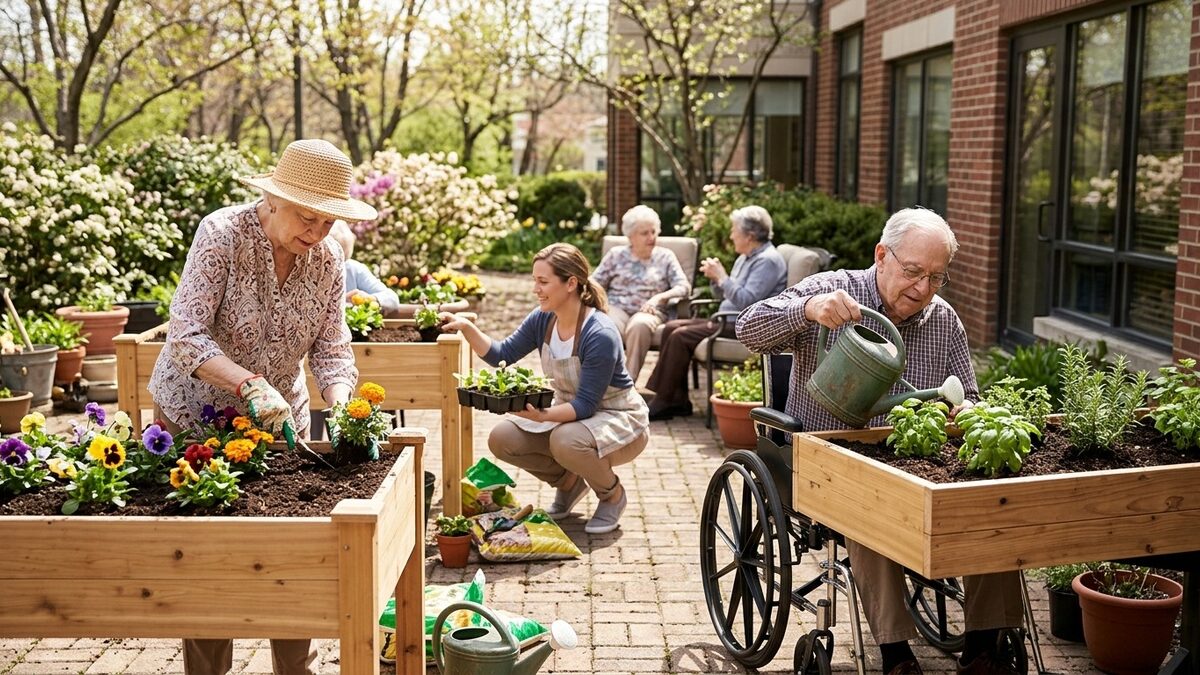
Fresh air, sunshine and a change of scenery can lift a whole community. Yet in many senior living buildings, residents can go days without stepping outside. A good outdoor program fixes that with a mix of gentle exercise, gardening, games and outings that work for every ability, including residents who use wheelchairs or live with dementia.
Here are 30 outdoor activities for seniors, grouped by type, plus how to adapt them and keep everyone safe. On rainy days, swap in ideas from our indoor activities for seniors list.
Key takeaways
- The CDC recommends adults 65 and older get at least 150 minutes of moderate activity a week, plus muscle-strengthening and balance activities. Outdoor walks and gardening count.
- A study of nearly 20,000 people linked at least 120 minutes a week of recreational time in nature with better health and well-being, including for older adults.
- It didn’t matter whether that time came in one visit or several shorter ones, so regular short trips outdoors are worth planning.
- Plan for heat, sun and uneven ground: more than one in four older people fall each year.
Why outdoor activities matter
Researchers at the University of Exeter studied 19,806 people and found that, compared with no time in nature, people who spent at least 120 minutes in nature in the previous week were significantly more likely to report good health and high well-being. The pattern held for older adults and for people with long-term health conditions, and it didn’t matter whether the time came in one long visit or several shorter ones (White et al., Scientific Reports, 2019). The study measured recreational visits to nature and shows a link, not proof that nature caused the better health. Treat 120 minutes as a rough guide: time in your community’s garden is a good start, and regular outings to parks and green spaces get closer to what the study measured.
Outdoor time also helps residents meet physical activity guidelines. The CDC recommends that adults 65 and older get at least 150 minutes of moderate-intensity activity each week, such as 30 minutes a day, five days a week, plus at least two days of muscle-strengthening activity and activities that improve balance (CDC).
Gentle exercise outdoors
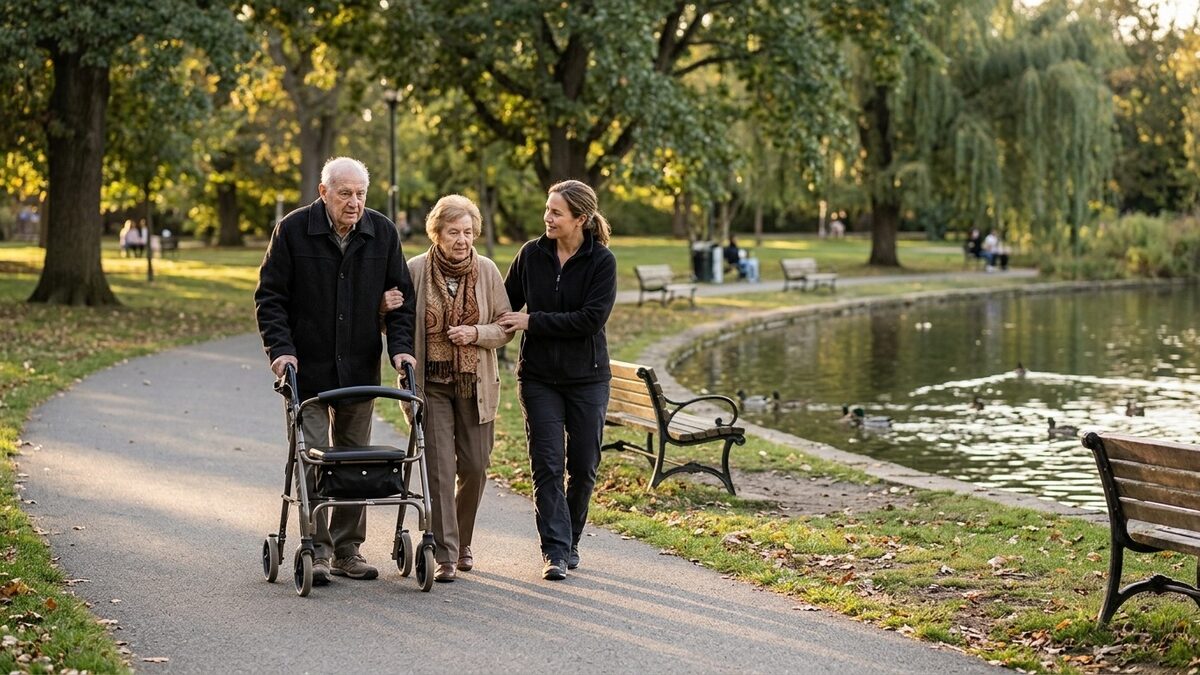
- Walking club. A set route around the grounds at the same time each day. Add benches every few hundred feet.
- Seated exercise on the patio. Take your usual chair exercises outside on a mild morning.
- Tai chi in the garden. Slow, flowing movements that support balance. Chairs nearby for support.
- Nature scavenger hunt. Find a red flower, a pine cone, a bird, a smooth stone. Works on foot or by wheelchair.
- Balloon or beach ball volley. Seated in a circle on the lawn, keep the ball in the air.
- Stretch and breathe. Five minutes of gentle stretches and deep breathing to start an outdoor event.
- Wheelchair-friendly path walks. Pair residents with staff or volunteers for a loop on smooth paths.
Gardening and nature
- Raised-bed gardening. Waist-high or wheelchair-height beds for herbs, tomatoes and flowers.
- Container planting. Pots of flowers on a patio table, so nobody has to bend or kneel.
- Herb garden club. Grow basil, mint and rosemary, then use them in a cooking activity (check diets first).
- Bird watching. Hang feeders near seating areas and keep a bird checklist with a field guide.
- Butterfly garden. Plant coneflowers, lavender and zinnias and track visiting butterflies. Check residents for bee-sting allergies, and in memory care gardens choose plants that are safe if touched or tasted.
- Flower arranging. Cut flowers from the garden and arrange them for dining tables.
- Nature crafts. Pressed flowers, leaf rubbings and painted rocks for the garden. See more craft activities for seniors.
- Sensory garden visit. Touch lamb’s ear, smell rosemary, listen to wind chimes.
Outdoor games and social events
- Bocce ball. Easy to learn, can be played seated, and great for friendly competition.
- Cornhole or bean bag toss. Move the boards closer for residents with less strength.
- Ring toss. Use soft rubber rings instead of metal horseshoes.
- Croquet or lawn bowling. Classic lawn games many residents played growing up.
- Picnic lunch. Move a regular meal outdoors with checked tablecloths and lemonade.
- Ice cream social. A summer favorite that draws even reluctant residents outside.
- Outdoor concert. Invite a local band, choir or school group to play on the patio.
- Outdoor movie night. Project a classic film on a wall or screen at dusk, with blankets.
Before any picnic or social, check diets, allergies and swallowing plans, including thickened-liquid plans, since ice cream melts into a thin liquid. For more ideas that bring residents together, see our group activities for seniors guide.
Outings and seasonal events
- Farmers market trip. Small groups, a short visit, and a little spending money.
- Park or lake visit. Feed the ducks, sit on a bench, people-watch.
- Scenic drive. For residents who tire easily, a bus ride to see fall leaves or holiday lights.
- Zoo or botanical garden. Many have paved paths and wheelchairs to borrow or rent. Call ahead to check.
- Fishing at a pier or pond. Accessible fishing piers let residents fish from a wheelchair. Use barbless hooks and have staff bait and unhook.
- Porch sitting and chats. Never underestimate a rocking chair, a glass of iced tea and good company.
- Seasonal festivals. An outdoor fall harvest fair, a spring planting day or a summer barbecue for residents and families.
Adapting outdoor activities for limited mobility and dementia
For residents with limited mobility:
- Bring the activity to the resident: table-height planters, games played seated, shade over the seating area.
- Check paths for cracks, gravel and slopes before outings. Firm, level surfaces are best for wheelchairs and walkers.
- Keep sessions short and plan rest stops with shaded seating.
- For more ideas, see activities for seniors with limited mobility.
For residents with dementia:
- Use a secure courtyard or enclosed garden so residents can walk freely and safely.
- Choose familiar, purposeful tasks: watering plants, sweeping the patio, hanging washing on a line.
- Keep groups small and the setting calm. Busy public places can be overwhelming.
- On outings, pair each resident with dementia with a named staff member or volunteer and do regular headcounts.
- Bring residents back inside before late afternoon if restlessness tends to rise then.
Outdoor safety: heat, sun and falls
The National Institute on Aging warns that too much heat is risky for anyone, and even more so for older adults or people with health problems. Some heart medicines, such as beta blockers, make people more likely to feel faint in the heat (NIA). Falls are the other big risk: more than one out of four older people falls each year, according to the CDC (CDC).
- Schedule outdoor activities in the morning or early evening in summer, and move into the shade or indoors on very hot days.
- Offer water often, and follow any fluid limits or thickened-liquid plans in residents’ care plans.
- Provide hats, sunscreen and sunglasses, and seat residents in the shade.
- Walk the route first. Look for uneven paving, wet grass, hoses and steps.
- Bring walkers, wheelchairs and a charged phone. On outings, keep a list of residents’ medical needs and emergency contacts.
- Watch for dizziness, confusion, heavy sweating or flushed skin, and get anyone affected to a cool place right away.
A simple weekly outdoor plan
| Day | Morning | Afternoon |
|---|---|---|
| Monday | Walking club (20 min) | Bird watching on the patio |
| Tuesday | Raised-bed gardening | Porch chats with lemonade |
| Wednesday | Seated exercise outdoors | Bocce or cornhole |
| Thursday | Walking club (20 min) | Flower arranging |
| Friday | Tai chi in the garden | Picnic lunch or ice cream social |
This plan gets residents outside every weekday. Add a monthly outing to a park or garden to give them more time in green spaces.
Plan your outdoor program in minutes
Outdoor activities work best when they’re on the calendar every week, with indoor backups ready for bad weather. ActivityBuilder lets you build your activity calendar with recurring events like a daily walking club, and swap in indoor ideas when it rains. Start a free trial and get your residents outside more often.
Frequently Asked Questions
What are good outdoor activities for seniors?+
Good outdoor activities for seniors include walking clubs, raised-bed gardening, bird watching, bocce, cornhole, picnics, ice cream socials, outdoor concerts, farmers market trips, park visits and simply sitting on the porch with friends.
What outdoor activities are good for seniors in wheelchairs?+
Wheelchair-height raised beds, container planting, bird watching, seated ball games, bocce, path walks with a companion on smooth surfaces, accessible fishing piers, picnics and outdoor concerts all work well from a wheelchair.
How much time should seniors spend outdoors?+
A 2019 study of nearly 20,000 people linked at least 120 minutes a week in nature with better health and well-being, including in older adults. It can be spread across several short visits, like 20 to 30 minutes on most days.
What outdoor activities are good for people with dementia?+
Walks in a secure courtyard or enclosed garden, watering plants, sweeping, bird watching, sensory gardens, and small, calm picnics work well. Avoid busy, noisy places and late-afternoon outings if restlessness rises then.
How do you keep seniors safe outdoors in hot weather?+
Schedule activities in the morning or early evening, use shade, offer water often (within any fluid limits), provide hats and sunscreen, and watch for dizziness or confusion. The National Institute on Aging notes that heat is riskier for older adults and people with health problems.
Stop planning from scratch
ActivityBuilder gives you 580+ ready-to-use activities, 30+ in-browser games, and a drag-and-drop calendar builder — everything in this article, done for you.
Start your 7-day free trial →