Games for Dementia Patients: 30 Simple, Fail-Proof Ideas by Stage
October 2, 2026 · 8 min read
The right game can turn a quiet afternoon in memory care into the best part of a resident's day. Games give people living with dementia a chance to use skills they still have, connect with others, and simply have fun. The trick is choosing games that match each person's stage and setting them up so nobody can "lose."
This guide gives you 30 games for dementia patients, grouped by stage, along with practical tips for running them. For a broader look at programming, see our dementia and memory care activities guide.
Key takeaways
- About 7.4 million Americans aged 65 and older are living with Alzheimer's in 2026, so dementia-friendly games belong on every activity calendar.
- The UK's NICE guideline recommends group cognitive stimulation, a structured mix of games, discussion and themed activities, for people with mild to moderate dementia.
- Match the game to the stage: rules and recall for early stage, simple matching and sorting for middle stage, sensory and rhythm games for late stage.
- Make every game fail-proof. Praise effort, skip scoring, and end while it's still fun.
Why games matter in memory care
Dementia is common among the people activity directors serve. The Alzheimer's Association estimates that 7.4 million Americans aged 65 and older are living with Alzheimer's in 2026, about 1 in 9 people in that age group (Alzheimer's Association, 2026).
Games are one of the best tools you have for this group. The UK's National Institute for Health and Care Excellence (NICE) recommends offering a range of activities tailored to each person's preferences to promote wellbeing, and offering group cognitive stimulation therapy to people living with mild to moderate dementia (NICE guideline NG97). Cognitive stimulation therapy programs, developed at University College London, typically mix word games, number games, physical games and themed discussion, much like a well-run game hour.
Games for early-stage dementia
In the early stage, most residents can still follow rules and enjoy a bit of challenge. Keep the pace relaxed and the atmosphere social.
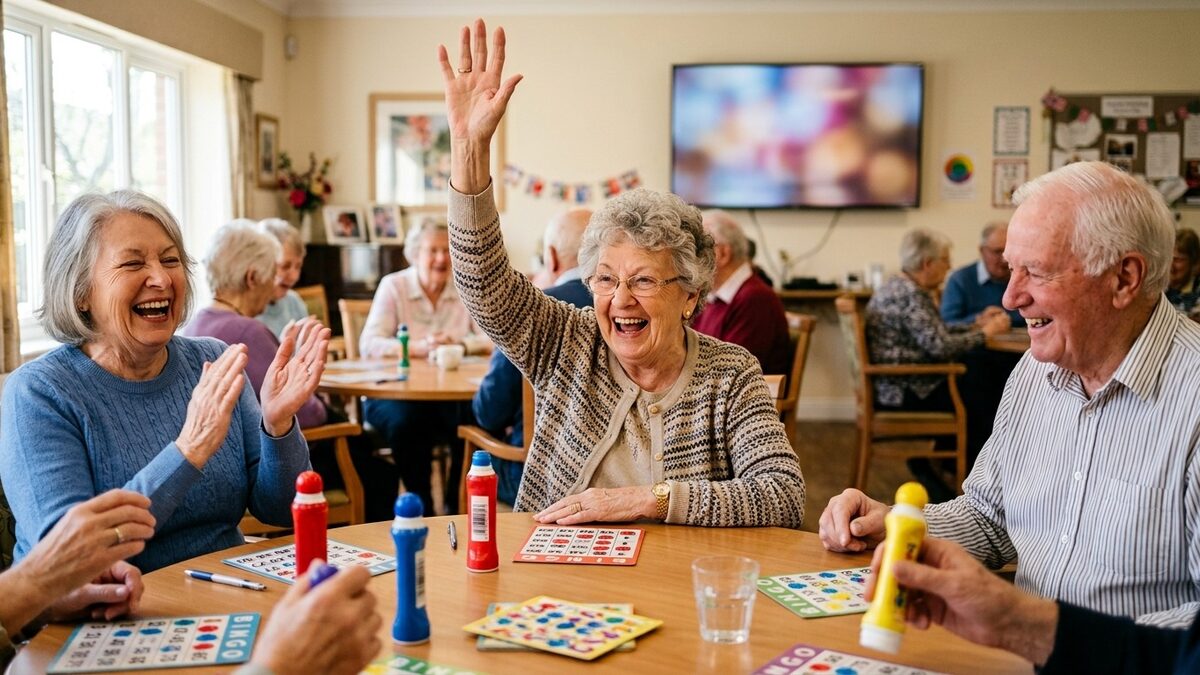
- Large-print bingo. Familiar, social, and easy to follow. See our full bingo for seniors guide.
- Dominoes. Matching dots is intuitive, and color-dot sets are easier to see.
- Simple card games. Go Fish, Crazy Eights, War, and Uno use familiar patterns.
- Finish the phrase. "A penny saved is…" Old sayings are often well preserved.
- Name that tune. Play the first notes of songs from residents' teens and twenties.
- Category games. Name five flowers, five car brands, or five things in a kitchen.
- Easy trivia by decade. Open-ended questions about the 1950s and '60s. More in our trivia for seniors guide.
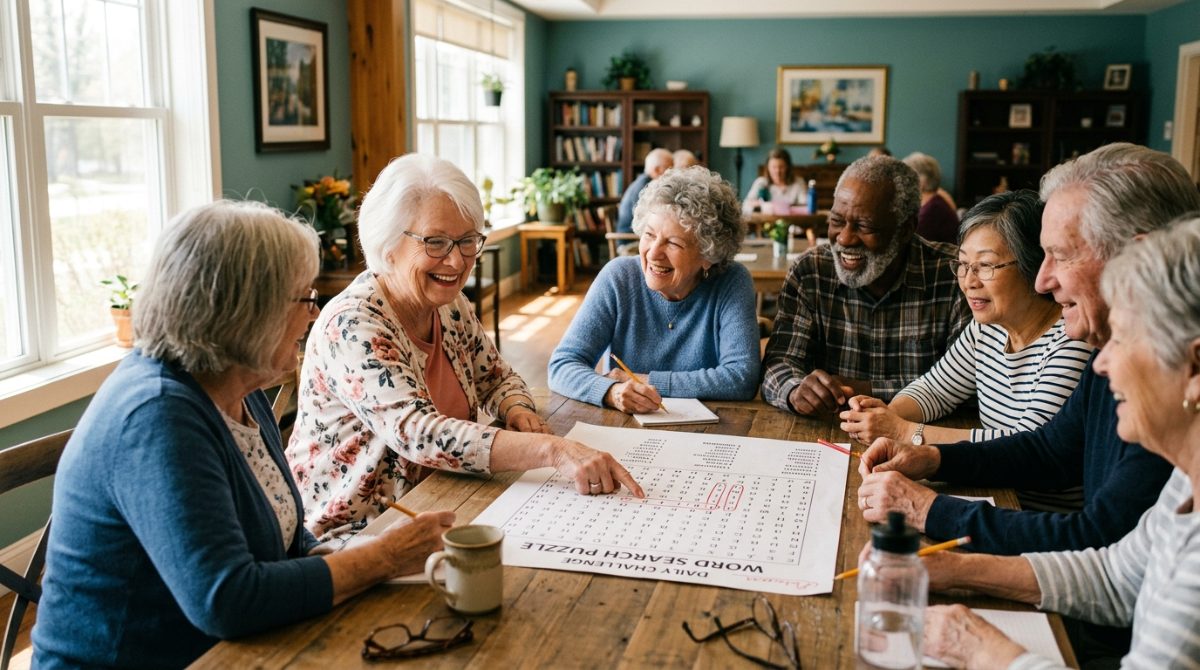
- Word scrambles and crosswords with large letters and short words. Our word games for seniors has group versions.
- Checkers. A long-familiar favorite, played one move at a time.
- Jigsaw puzzles with 24 to 100 large pieces and a picture they recognize.
Games for middle-stage dementia

In the middle stage, keep rules to one step and lean on recognition rather than recall. Matching, sorting and movement work well.
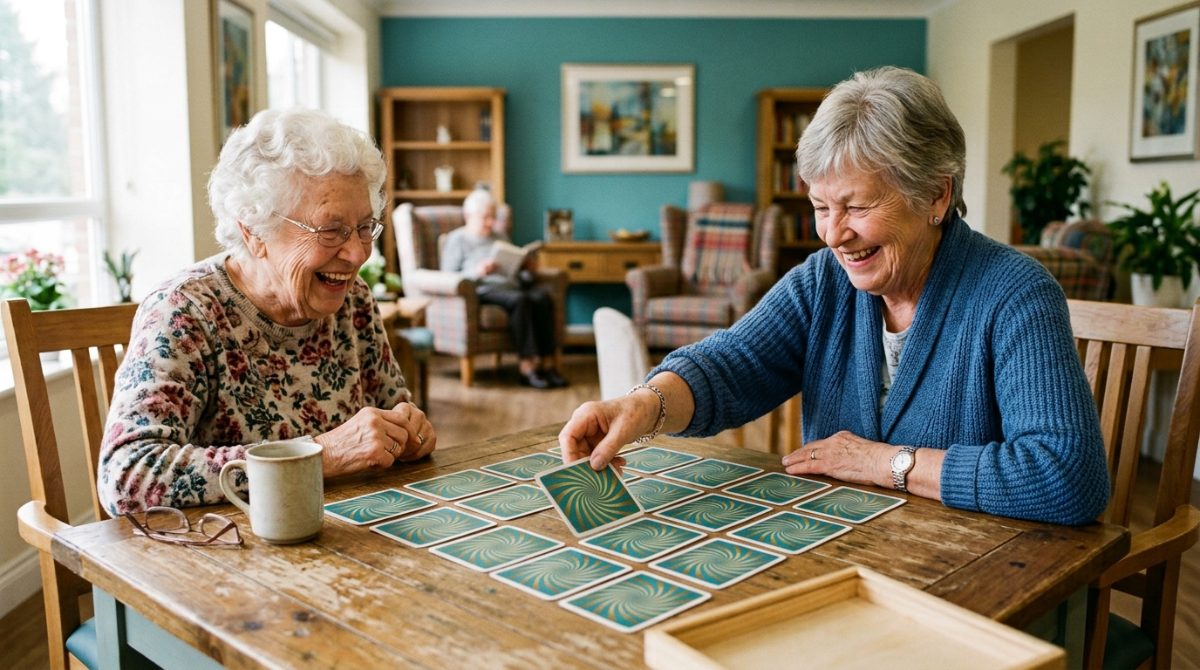
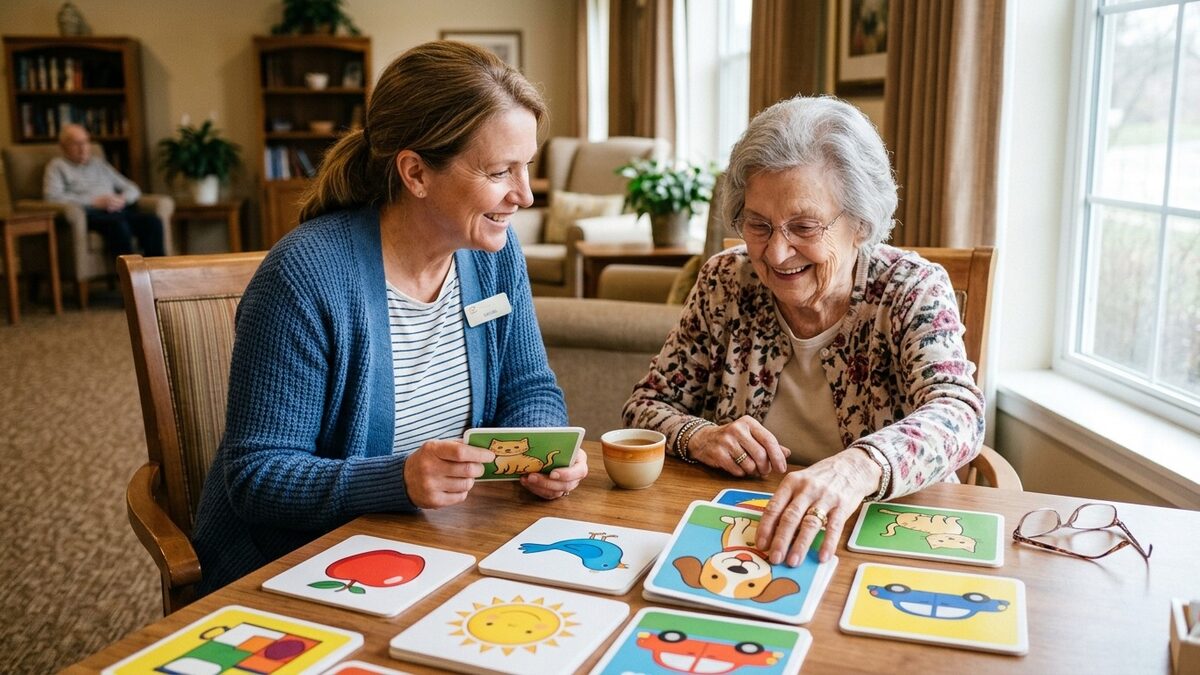
- Picture matching. Oversized cards with clear pictures, two to six pairs at a time.
- Seated balloon toss. Gentle movement, lots of laughter, and nobody can do it wrong.
- Sorting games. Sort large items like socks, silverware or playing cards by color or suit. Skip buttons and anything small enough to swallow.
- Ring toss or bean-bag toss into a bucket from a seated position.
- Color matching. Match colored blocks or pom-poms to colored cups.
- "What's in the bag?" Feel a familiar object, like a spoon, a brush or a ball, and guess what it is.
- Simple picture bingo. Pictures instead of numbers, with a staff partner at each table.
- Sing-along fill-in. Start a familiar line of a song and pause for the group to finish it.
- Bowling with plastic pins in a hallway or activity room.
- Photo guessing. Show pictures of old cars, famous faces or everyday objects from past decades.
Our memory games for seniors guide has more matching and recall games, sorted by ability level.
Games for late-stage dementia
In the late stage, the "game" is really about connection and the senses. Keep it one-on-one or in very small groups.
- Rhythm games. Tap a simple beat on a drum or the table and invite the resident to copy it.
- Rolling a ball back and forth across a table.
- Texture matching. Pair squares of fabric: soft, rough, smooth.
- Scent guessing. Lemon, cinnamon, coffee and lavender, one at a time.
- Bubble play. Blowing or watching bubbles is calming and joyful.
- Mirror movement. Slow hand and arm movements the resident follows.
- Hand-clapping songs from childhood.
- Slow photo reveal. Reveal a family or pet photo slowly from behind a card.
- Stacking cups or blocks in a simple tower.
- Music and movement. Sway, wave scarves or tap along to a favorite song.
For quiet sensory ideas that help when residents are anxious, see our guide to calming activities for dementia patients.
How to make any game fail-proof
- Drop the scoreboard. Celebrate taking part, not winning. If you keep score, make sure everyone ends up a winner.
- Show, don't tell. Demonstrate the game instead of explaining the rules.
- Offer help without taking over. Hand the next card, point gently, or say the first sound of a word.
- Keep sessions short. 15 to 30 minutes is usually plenty. End on a high note.
- Reduce distractions. Turn off the TV, close the door, and keep the table clear.
- Never correct harshly. If a resident says the wrong answer, go with it or gently move on.
- Use big, high-contrast materials. Large print, bold colors and pieces that are easy to grip.
- Keep it safe. Supervise closely, avoid small pieces that could be swallowed, and check for latex allergies before balloon games.
Board and card games for dementia patients
Board and card games are popular searches for families and staff. Good choices include:
| Game | Best stage | Why it works |
|---|---|---|
| Dominoes (color-dot) | Early to middle | Simple matching with a familiar feel |
| Checkers | Early | Long-familiar rules, one move at a time |
| Go Fish / Uno | Early to middle | Matching pairs, easy to help with |
| Picture matching cards | Middle | Recognition instead of recall |
| Large-print bingo | Early to middle | Social, structured and predictable |
| Simple jigsaws | Early to middle | Calm focus and a sense of completion |
For residents without dementia, our roundup of games for seniors covers more challenging options.
Play games on the activity room TV
ActivityBuilder runs 30+ games on your activity room TV, including card matching, bingo with a built-in caller, crosswords and word games. Big, clear visuals help residents with memory and vision changes follow along, and you can plan every game session on your activity calendar. Start a free trial and run your next memory care game hour from the TV.
Frequently Asked Questions
What games are good for dementia patients?+
Good games for dementia patients include large-print bingo, dominoes, simple card games like Go Fish, picture matching, sorting games, seated balloon toss, name that tune, and sensory games like texture or scent matching. Choose games that match the person’s stage and keep them fail-proof.
What are simple games for dementia patients in later stages?+
In late-stage dementia, focus on sensory and rhythm games: rolling a ball, tapping a simple beat, texture matching, scent guessing, bubble play, stacking cups, and gentle music and movement. Keep it one-on-one and focus on connection rather than rules.
Are board games good for people with dementia?+
Yes, simple board games such as dominoes, checkers, and large-piece matching games can be enjoyable for people in early to middle stages. Use large, high-contrast pieces, explain by demonstrating, and avoid strict scoring.
How long should a game session last in memory care?+
Usually 15 to 30 minutes is enough. Watch for signs of tiredness or frustration and end while residents are still enjoying themselves.
Do games help people with dementia?+
The UK’s NICE guideline recommends group cognitive stimulation therapy for people living with mild to moderate dementia; these sessions usually include word, number and physical games. Games also provide social connection, enjoyment, and a sense of success.
Stop planning from scratch
ActivityBuilder gives you 580+ ready-to-use activities, 30+ in-browser games, and a drag-and-drop calendar builder — everything in this article, done for you.
Start your 7-day free trial →