101 Questions to Ask Your Grandparents (+ Printable Interview Booklet)
November 14, 2026 · 9 min read
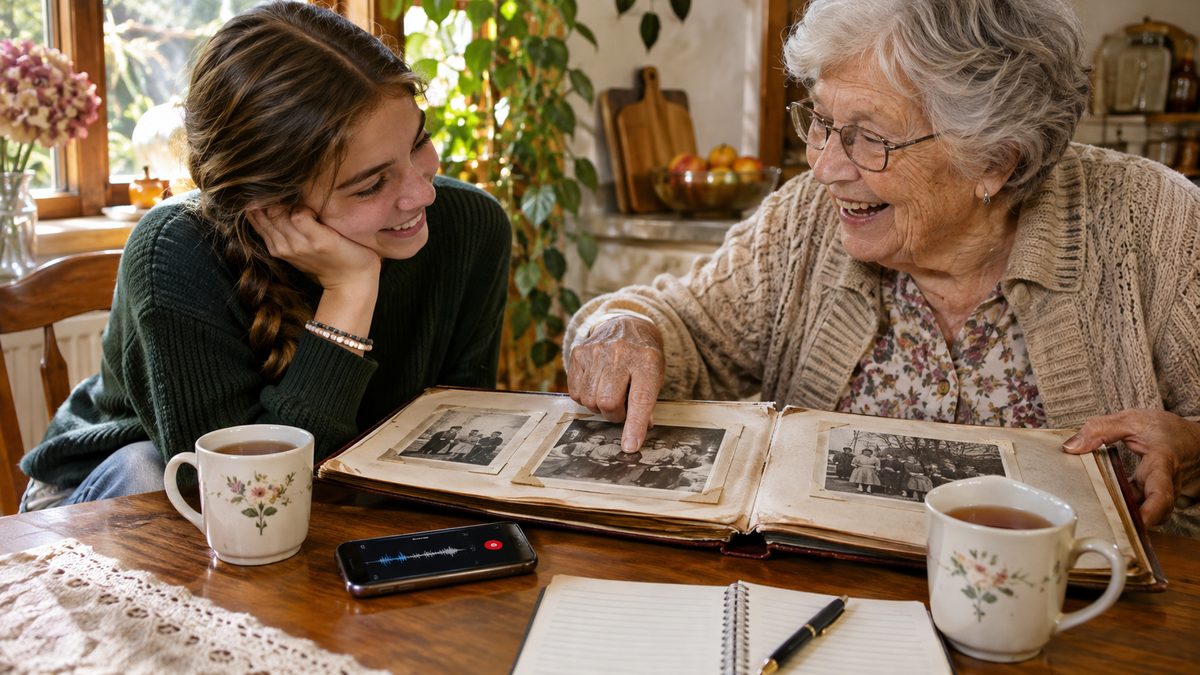
Every grandparent carries stories nobody else knows: the house they grew up in, the first job that paid in cash, the song they danced to, the advice they wish someone had given them. The simplest way to hear those stories is to ask, and a good list of questions makes it easy to start.
Here are 101 questions to ask your grandparents, grouped into nine topics from childhood to life lessons, plus interview tips and a free printable interview booklet (PDF) with space to write every answer. The questions also work for intergenerational programs, when students visit residents in senior living.
Key takeaways
- 101 open-ended questions in nine topics, from childhood and school to love, work and wisdom.
- Pick 10 to 15 questions per visit and follow up with “Tell me more about that.”
- Record the conversation with permission, or write the answers in the printable booklet.
- Let your grandparent skip any question, especially about painful times.
How to interview your grandparents
- Ask first and pick a good time. Choose a time of day when your grandparent is rested. FamilySearch recommends finding a quiet, calm place for the interview and avoiding yes-or-no questions (FamilySearch).
- Bring prompts. Old photos, a recipe card, a medal or a piece of jewelry can unlock a story faster than any question.
- Ask open questions. “What was your first job like?” gets a better answer than “Did you like your first job?”
- Follow up. “What happened next?” and “How did that feel?” turn a short answer into a story.
- Record with permission. A phone voice memo works well. Say the date and your grandparent’s name at the start, and back up the file in two places.
- Keep it short. Pick 10 to 15 questions per visit; 30 to 45 minutes is plenty. You can always come back for more.
- Share it back. Type up the answers, add photos and give copies to the family, starting with your grandparent.
101 questions to ask your grandparents
Childhood
- Where were you born, and where did you grow up?
- What did the house you grew up in look like?
- What is your earliest memory?
- What games did you play as a child?
- Who was your best friend growing up, and what did you do together?
- Did you have a pet? What was its name?
- What chores did you have to do?
- What was your favorite food when you were little?
- What did you get in trouble for?
- What was your favorite toy?
- What did your neighborhood sound and smell like?
- What did you want to be when you grew up?
- How did you spend summer vacations?
- What was the best gift you ever got as a child?
- What scared you when you were small?
School and teenage years
- What was your school like? How did you get there each day?
- What was your favorite subject, and which one did you dislike?
- Who was your favorite teacher, and why?
- What did kids wear to school back then?
- What music did you love as a teenager?
- What did you and your friends do on weekends?
- Did you have a part-time job as a teenager?
- Did you learn to drive? Who taught you?
- What was the first movie you remember seeing in a theater?
- What was a school dance or big event like?
- What did you do when you finished school?
- What is something you did as a teenager that your parents never found out about?
Family and parents
- Who raised you, and what were they like? What work did they do?
- What is something you learned from the people who raised you?
- Did you have brothers or sisters? What were they like as kids?
- Did you know your own grandparents? What do you remember about them?
- Where did your family come from, as far back as you know?
- What languages were spoken in your home?
- What did your family do together for fun?
- What was dinnertime like in your house?
- What family stories were told over and over?
- Is there a family recipe that has been passed down?
- Who in the family am I most like?
- What was the happiest time in your family’s life?
Love and friendship
- Who was your first crush?
- Who have you loved most in your life, and how did you meet?
- What was your first date like?
- What do you think makes a relationship last?
- Who has been your most loyal friend?
- How did people stay in touch with friends before cell phones?
- What is the most romantic thing anyone ever did for you?
- What did you do for fun as a young adult?
- What advice would you give me about choosing friends?
- Who are the people who changed your life most?
Work and everyday life
- What was the first work you ever did, paid or unpaid, and what did you earn?
- What kinds of work have you done over the years, at home or outside it?
- What was the hardest job you ever had?
- Did you ever serve in the military? What was that like?
- How much did things like a gallon of gas, a movie ticket or a loaf of bread cost when you were young?
- When did your family get its first TV, telephone or car?
- What was your first home as an adult like?
- How did you do laundry, cooking and shopping when you were young?
- What invention made the biggest difference in your life?
- What did you do when you took a day off?
History and the world
- What big news events do you remember most clearly?
- How did your family get the news when you were young: newspaper, radio or TV?
- How has your hometown changed since you were young?
- What was the biggest change you have seen in the world?
- What do you miss most about the old days?
- What is better about life today?
- Who were the famous people everyone talked about when you were young?
- What did you think the future would be like?
- Have you lived through any hard times that taught you something?
- What was the farthest you traveled when you were young?
Holidays and traditions
- What was your favorite holiday as a child, and how did your family celebrate?
- What special foods did your family make for holidays?
- What is the most memorable gift you ever gave?
- How did your family celebrate birthdays?
- Were there any family traditions you started yourself?
- What songs did your family sing together?
- What was a typical weekend like in your house?
- Did your family have a religious or cultural tradition that was important to you?
- What is your favorite holiday memory with our family?
- Which tradition do you most hope we keep?
Wisdom and advice
- What is the best advice you ever received?
- What are you most proud of in your life?
- What would you tell your 20-year-old self?
- What is something you changed your mind about as you got older?
- What makes you happiest these days?
- What is one mistake you learned the most from?
- What is a skill you are glad you learned?
- How would you like to be remembered?
- What do you wish you had asked your own grandparents?
- What is something you still want to do or learn?
- What book, movie or song changed the way you saw the world?
- Is there a story from your life you wish more people knew?
Fun and quick questions
- What is your favorite song of all time?
- What is the best meal you have ever eaten?
- If you could live in any decade again, which would it be?
- What is your favorite movie, and who is your favorite movie star?
- What is the silliest thing you have ever done?
- What car, bike or way of getting around do you remember best?
- What is your favorite smell?
- Which place would you most like to visit again?
- What is the funniest thing that ever happened to you?
- What do you enjoy most about this time of your life?
Why family stories matter
In a 2008 study, Emory University psychologists Marshall Duke, Amber Lazarus and Robyn Fivush found that children’s and teens’ knowledge of family history was linked with higher self-esteem, better family functioning and lower levels of anxiety (Duke, Lazarus and Fivush, 2008). The research shows a link, not proof that the stories cause it. Families often find that hearing how a grandparent got through hard times, moved to a new place or started over helps children see themselves as part of a longer family story, and many grandparents enjoy telling those stories too.
Tips for sensitive topics
- Let them lead. War, loss, divorce, money worries, illness or discrimination may come up. Listen, and don’t push for details.
- Make skipping easy. Say at the start, “If you’d rather not answer one, just say pass.”
- Be gentle about military service. Questions about serving can bring back hard memories, so let your grandparent decide how much to share.
- Pause if they get upset. Offer comfort, take a break and move to a happier topic, such as a favorite holiday or meal.
If your grandparent has memory loss
- Ask about feelings and favorites, not dates and names. “What did you love about summer?” is easier than “What year did you move?”
- Use photos, music and objects as prompts.
- Offer two choices when open questions are hard: “Did you like the city or the country better?”
- Never say “Don’t you remember?” Accept whatever answer you get, and enjoy the conversation.
- Respond to the feeling. If your grandparent talks about someone who has died as if they were still alive, talk about what that person meant to them rather than correcting them.
- Help them hear and see. Sit face to face in good light, turn off the TV and use the large-print booklet.
- Start with the easiest questions, such as a favorite food, song, smell or place.
Structured reminiscence programs have also been studied: a Cochrane review found that reminiscence therapy can improve quality of life, cognition, communication and possibly mood in people with dementia in some circumstances, although all the benefits were small (Cochrane). Our reminiscence therapy activities and conversation starters for seniors have more ideas.
Using these questions in senior living
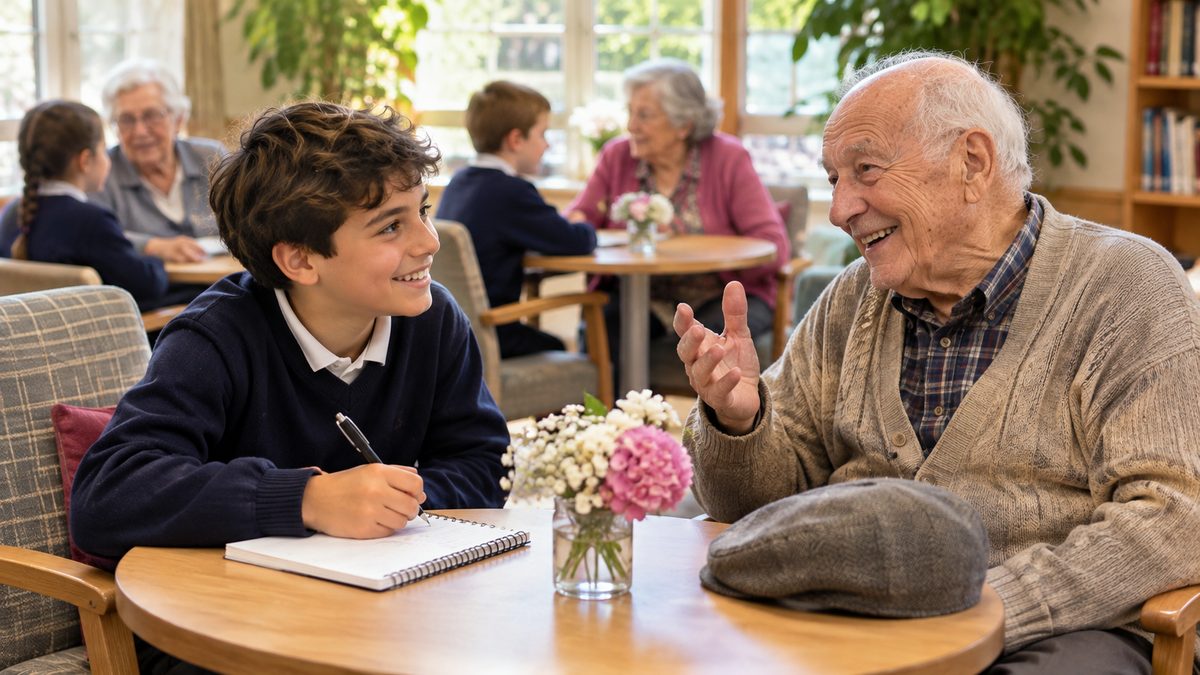
Activity directors can turn this list into an intergenerational “story interview” program:
- Partner with a school, scout troop or youth group and pair each student with a resident who would like to share stories.
- Prepare students with 10 questions from this list and a few listening tips: make eye contact, speak clearly and let the resident finish.
- Protect privacy. Get consent from each resident (or their legal representative, if needed) before recording or taking photos, follow your community’s media consent and volunteer screening policies, keep a staff member present, and record only on community devices, with nothing posted to social media without permission.
- Use a short, general list. Skip questions that refer to “our family” and personal romance or secrets questions, and let residents pass on any question.
- Celebrate the stories with a display, a printed booklet for each resident or a sharing afternoon with families, after each resident (or their legal representative) has read and approved their story.
StoryCorps, the national oral history project, publishes a free list of “Great Questions,” including a section for grandparents (StoryCorps). For more ideas, see our intergenerational activities for seniors.
Ways to keep the stories
- Type the answers into a short booklet with photos and print copies for the family.
- Save audio or video recordings in two places, such as a computer and cloud storage.
- Turn family recipes into a small cookbook with the stories behind them.
- Add names, dates and places to a family tree.
Plan intergenerational activities in minutes
For activity directors, ActivityBuilder’s activity calendar builder includes 580+ ready-to-run activities, including reminiscence and intergenerational programs. Start a free trial and plan your next month in minutes.
Frequently Asked Questions
What are good questions to ask grandparents?+
Open-ended questions about their childhood, school years, parents, first jobs, how they met the people they loved, holidays and the best advice they ever got, such as “What did the house you grew up in look like?” or “What would you tell your 20-year-old self?”
What should I ask my grandparents about their childhood?+
Ask where they grew up, what their house and neighborhood were like, what games they played, what chores they had, who their best friend was and what they wanted to be when they grew up.
How do you interview a grandparent?+
Ask permission, pick a quiet time when they are rested, bring old photos as prompts, ask open questions with follow-ups like “Tell me more,” record with permission and keep the session to about 30 to 45 minutes.
Is there a printable list of questions to ask grandparents?+
Yes. This post includes a free printable interview booklet with all 101 questions and lines to write each answer.
What if my grandparent doesn’t want to answer a question?+
Let them skip it. Some memories are painful, so make passing easy from the start and move to a happier topic.
Stop planning from scratch
ActivityBuilder gives you 580+ ready-to-use activities, 30+ in-browser games, and a drag-and-drop calendar builder — everything in this article, done for you.
Start your 7-day free trial →