101 Conversation Starters for Seniors (+ Free Printable Question Cards)
October 31, 2026 · 9 min read
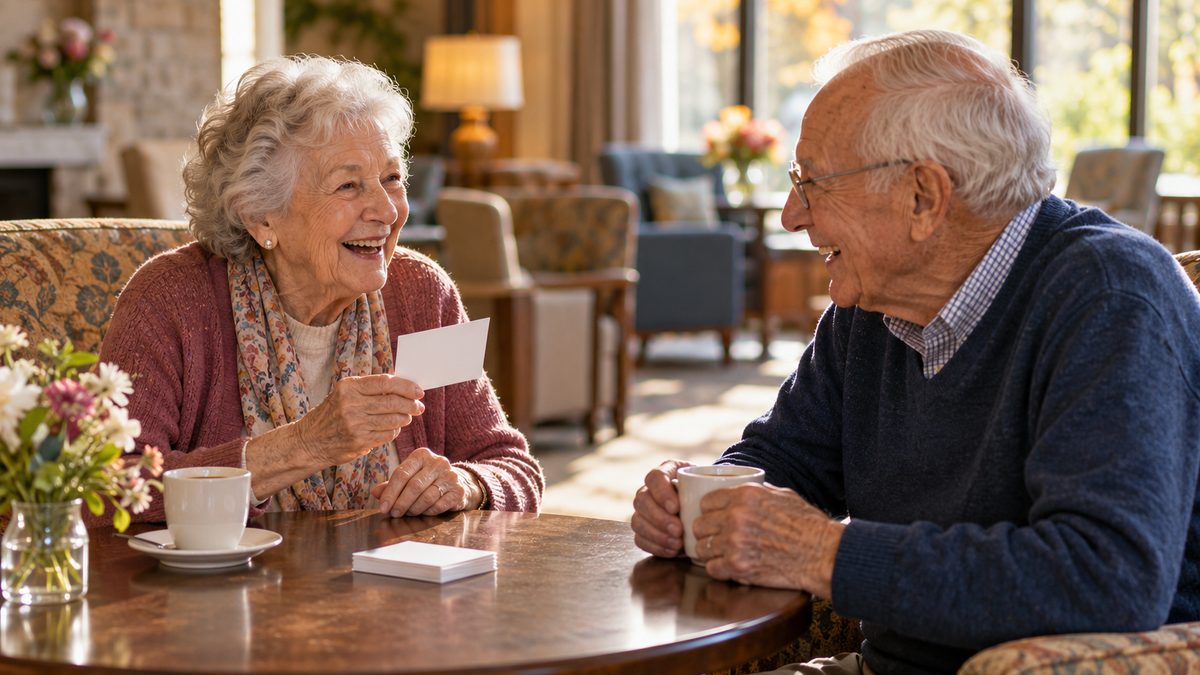
A good question can turn a quiet visit into an hour of stories. Whether you’re an activity director running a group, a volunteer meeting a resident for the first time or a grandchild on a Sunday visit, the right conversation starter makes it easy to get past “How are you feeling today?”
Below are 101 conversation starters for seniors in 13 themes, from childhood and first jobs to music, food and life lessons. The last 10 are easy either-or questions for people living with dementia. All 101 are also in a free printable set of large-print question cards (PDF).
Key takeaways
- 101 questions in 13 themes, including 10 easy either-or questions for people living with dementia, plus free printable question cards.
- Loneliness and social isolation are linked to higher risks of heart disease, depression, cognitive decline and dementia in older adults, according to the National Institute on Aging.
- Ask one question at a time, give plenty of time to answer, and follow the story wherever it goes.
- For people living with dementia, simple yes-or-no and either-or questions are often easier to answer than open-ended ones.
Why conversation matters for older adults
The National Institute on Aging says loneliness and social isolation are linked to higher risks of high blood pressure, heart disease, a weakened immune system, depression, cognitive decline and dementia (National Institute on Aging). The U.S. Surgeon General’s 2023 advisory found that about half of U.S. adults reported experiencing measurable loneliness (U.S. Surgeon General).
Sharing memories can help, too. A Cochrane review of 22 studies with 1,972 people found some evidence that reminiscence can improve quality of life, cognition and communication, and possibly mood, for people living with dementia, though the effects were small and varied (Cochrane). Our guide to reminiscence therapy activities covers structured sessions.
101 conversation starters for seniors
Not every question fits every person. Many older adults never married, had no children, left school early, worked at home, grew up without much money, or lost family to illness, war or estrangement. Skim the list first, choose the questions that suit the person in front of you, and skip any that feel tender.
Childhood and Growing Up
- What did your childhood home look like?
- What games did you play with friends as a child?
- Who was your best friend growing up, and what did you do together?
- What chores did you have as a child?
- What was your favorite toy?
- What did Sunday afternoons look like when you were young?
- What did you want to be when you grew up?
- What was the best birthday you can remember?
- What was your neighborhood like?
- What smells remind you of your childhood?
School Days
- What was your favorite subject in school?
- Who was a teacher you still remember?
- How did you get to school each day?
- What did you usually eat for lunch at school?
- Were you more of a quiet student or a class clown?
- What did you and your friends do after school?
- What was your school’s big event of the year?
Work and Career
- What was your very first job?
- How much did you earn at your first job, and what did you buy with it?
- What work, paid or unpaid, did you do the longest?
- Who was the best person you ever worked with?
- What was the hardest part of your work?
- What skill from your work are you most proud of?
- What did a typical workday look like?
- If you could try any other job, what would it be?
- What advice would you give someone starting out in your line of work?
Love, Family and Friendship
- How did you meet your spouse or a special sweetheart?
- What was your first date like?
- Who is a young person you have enjoyed watching grow up?
- Who in your family made you laugh the most?
- What family tradition would you like to pass on?
- Who is a friend you have known the longest?
- Who was an older person you looked up to when you were young?
- What was a typical dinner like when you were young?
Food and Cooking
- What meal reminds you most of home?
- Did anyone teach you to cook, or did you learn on your own?
- What was your signature dish?
- What food did you dislike as a child but enjoy now?
- What was your favorite restaurant or diner?
- What did your family eat on special occasions?
- Did your family grow a garden? What did you grow?
- What is the best dessert you have ever had?
- What was the first thing you learned to bake or cook?
Music and Dancing
- What song always puts you in a good mood?
- Who was your favorite singer or band when you were young?
- Did you go to dances? Where did you go?
- Did you ever play an instrument or sing in a choir?
- What was the first record you bought?
- What song reminds you of someone special?
- What music was playing around you when you were growing up?
- Have you ever seen a famous performer live?
Movies, Radio and TV
- Who was your favorite movie star?
- What was the first movie you saw in a theater?
- What radio shows did your family listen to?
- What was it like the first time you watched television?
- What TV show did you never miss?
- Which movie could you watch again and again?
- Did you ever go to a drive-in theater?
Places and Travel
- Where is the most beautiful place you have ever been?
- What is a favorite trip or day out you remember?
- What is a place you visited that surprised you?
- If you could visit anywhere in the world, where would you go?
- What is the most memorable car, bus or train you ever rode in?
- Which places have you called home?
- What is a trip that did not go as planned?
Holidays and Traditions
- What was your favorite holiday as a child?
- What is a holiday tradition your family always kept?
- What is the best gift you ever received?
- How did your family celebrate the new year?
- What holiday food could you not do without?
- Who hosted the big holiday gatherings you remember?
- What is a holiday memory that still makes you smile?
Hobbies, Sports and Pastimes
- What hobby have you enjoyed the most?
- What sports did you play or watch?
- What is your favorite team, and why?
- Did you ever collect anything?
- What did you like to do on a free Saturday?
- What is something you made with your hands that you are proud of?
- Is there a hobby you always wanted to try?
Pets and Animals
- What pets have you had?
- What was the smartest animal you ever knew?
- Are you a dog person, a cat person, or neither?
- Did you grow up around farm animals?
- What is a funny story about a pet?
Life Lessons and Wisdom
- What is the best advice you have ever received?
- What are you most proud of in your life?
- What has changed the most since you were young?
- What do you think makes a good friend?
- What would you tell your 20-year-old self?
- What is something that always makes you laugh?
- What are you grateful for today?
Easy Either-Or Questions
- Coffee or tea?
- Summer or winter?
- Mountains or the beach?
- Sweet or salty snacks?
- Morning person or night owl?
- Rain or sunshine?
- Dancing or singing?
- Breakfast or dinner?
- Books or movies?
- City or countryside?
How to use these questions
- Start with something easy. Favorite foods, music or pets are good openers before deeper topics like work or family.
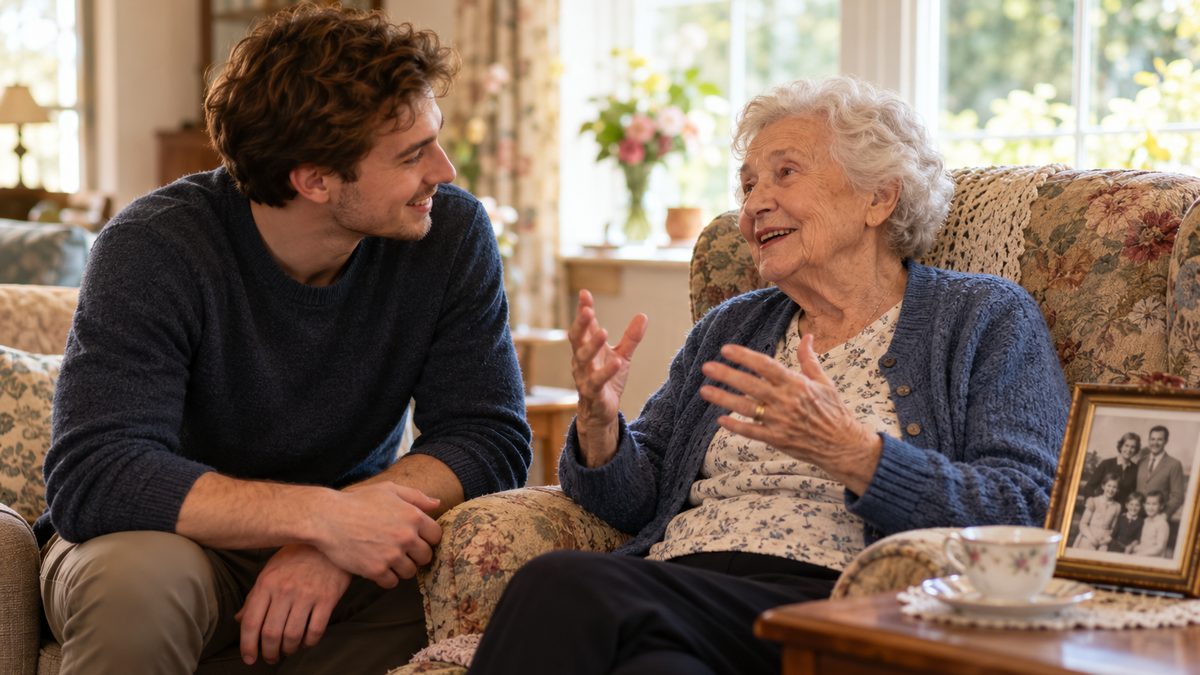
- Ask one question at a time. Give plenty of time to answer, and don’t rush to fill a pause.
- Follow up. “What happened next?” or “What did that feel like?” keeps a story going.
- Share a little of yourself. Conversation works best when it goes both ways.
- Be ready for strong feelings. Some questions about family or the past can bring up loss. Listen, acknowledge the feeling and gently change topics if needed.
Conversation tips for people living with dementia
The Alzheimer’s Association suggests asking one question at a time, using yes-or-no questions (“Would you like some coffee?” rather than “What would you like to drink?”), keeping eye contact, speaking slowly and avoiding correcting or arguing (Alzheimer’s Association). With these questions, that means:
- Start with the either-or questions at the end of the list. They rely on preference rather than memory.
- Turn any question into a yes-or-no one. Ask “Did you like to dance?” instead of “Where did you go dancing?”
- Use photos and objects as prompts. An old photo, a teacup or a familiar song can open a conversation.
- Don’t quiz. If an answer doesn’t match the facts, go with it. The point is connection, not accuracy.
- Watch for signs of fatigue and keep visits short.
For more ideas, see our dementia activities for seniors and free printable activities for dementia patients.
Ways to use conversation starters in senior living
- Morning coffee groups. Put one card on each table and let small groups share answers.
- New-resident welcomes. Pair a new resident with a neighbor and a few cards.
- Volunteer and family visits. Keep a set of cards at the front desk for visitors.
- Intergenerational visits. Students can interview residents. See our intergenerational activities for seniors.
- One-on-one room visits. A few questions make bedside visits easier for staff and volunteers.
Looking for group games instead? Try our trivia for seniors or group activities for seniors.
Plan social programs in minutes
ActivityBuilder’s activity calendar builder lets you schedule coffee groups, reminiscence sessions and volunteer visits alongside 580+ ready-to-run activities. Start a free trial and make connection part of every week.
Frequently Asked Questions
What are good conversation starters for seniors?+
Good conversation starters ask about memories and preferences, such as “What was your very first job?”, “What meal reminds you most of home?” or “What song always puts you in a good mood?” Open-ended questions about childhood, work, music, food and family usually spark the best stories.
What questions should you ask a senior with dementia?+
Simple either-or or yes-or-no questions, like “Coffee or tea?” or “Do you like this song?”, are often easier to answer than open-ended questions that rely on recall. Ask one question at a time, and avoid correcting or quizzing.
Why is conversation important for older adults?+
The National Institute on Aging links loneliness and social isolation to higher risks of heart disease, depression, cognitive decline and dementia. Regular, meaningful conversation is one simple way to stay connected.
How do you start a conversation with an elderly person you don’t know?+
Introduce yourself, sit at eye level, and start with an easy, positive question about something in view, like a photo, a plant or the weather, before moving to questions about their life and interests.
Are there printable conversation starter cards for seniors?+
Yes. This post includes a free printable PDF with all 101 questions as large-print cards to cut out and use in groups or one-on-one visits.
Stop planning from scratch
ActivityBuilder gives you 580+ ready-to-use activities, 30+ in-browser games, and a drag-and-drop calendar builder — everything in this article, done for you.
Start your 7-day free trial →